Category Archives: Uncategorized

Into Wyoming

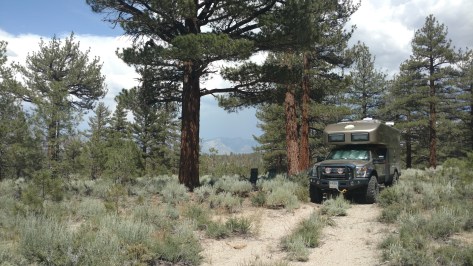
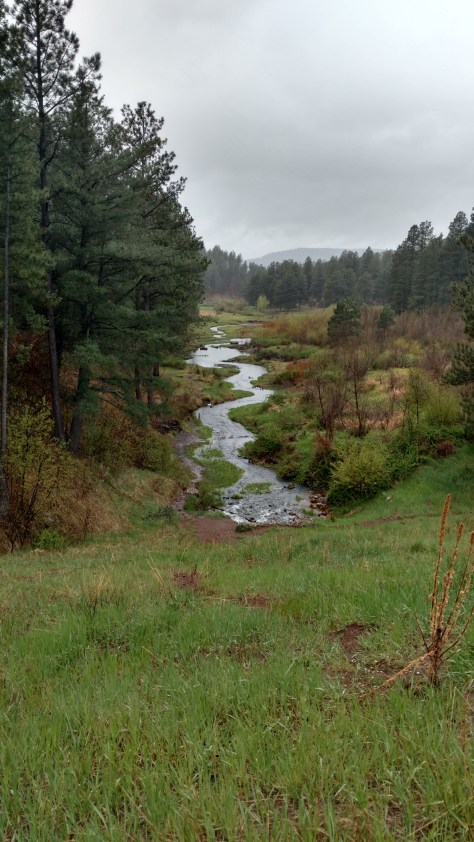
We left SLC heading east towards Park City, but turned further east into the Uinta National Forest along route 150. We camped in the mountains along this road with Allan and the kids a couple of years ago when we found River, the lost Great White Pyrenees. This time we picked a campsite a little further north in the forest along the Hayden Fork River.

IMG_20160717_142406250_HDR

IMG_20160718_073130814

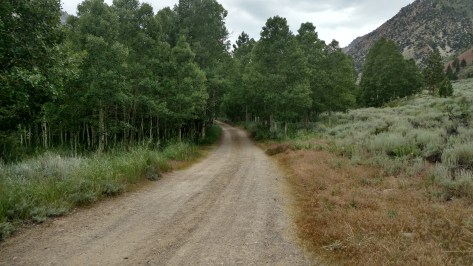
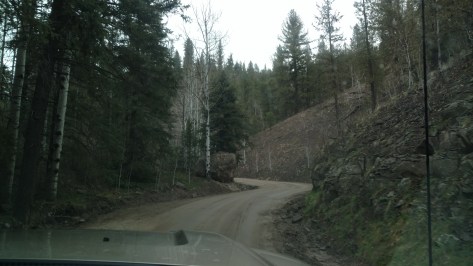
The next day we crossed into Wyoming and traveled along the back roads in the southwestern corner of the state. You can see the dirt road we crossed through this beautiful country. Why travel on pavement when there is so much better stuff to see in the back-country?

IMG_20160718_100504101

We passed the ghost town of Piedmont, WY along the dirt road, where the 30-foot stone ovens that turned 30 cords of wood into charcoal still stand today. The charcoal was used to power ore smelting to the south in SLC and blacksmithing to the north in Wyoming over 100 years ago. When the railroad line was re-routed, Piedmont slowly died until there were only the unused ovens left.

IMG_20160718_094643772

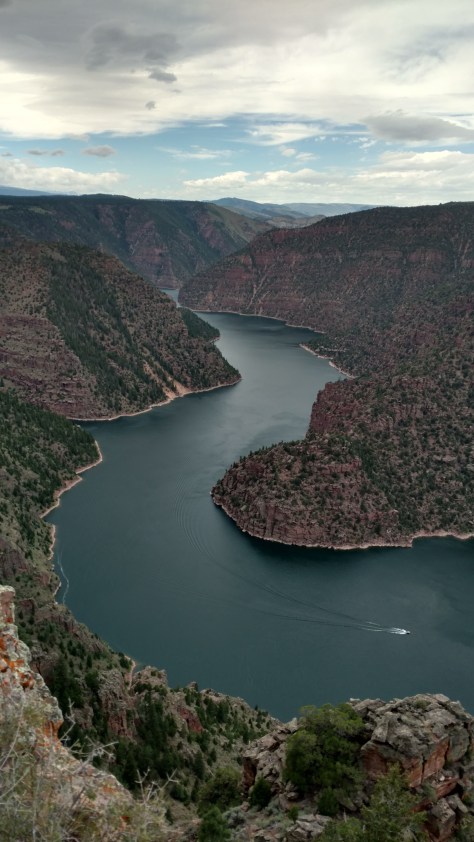
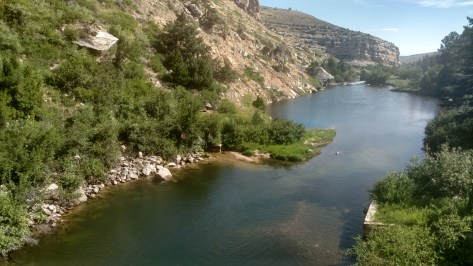
We continued east to Flaming Gorge, where the Green River was damned in the 1960s to provide farming water, recreation, and power to the local Wyoming-Utah border area.

IMG_20160718_115808529

IMG_20160718_124932929_HDR

IMG_20160718_125220511_HDR

There were a lot of dispersed camping sites in the woods around the gorge so we found a nice spot for the night next to an interesting layered 20-foot rock formation.

IMG_20160718_135844448_HDR

Heading north trough Rock Springs, WY we made our way to Farson, WY and had to stop for ice cream once we saw the sign. We both had maple walnut cones that were huge and delicious.

IMG_20160719_135256260

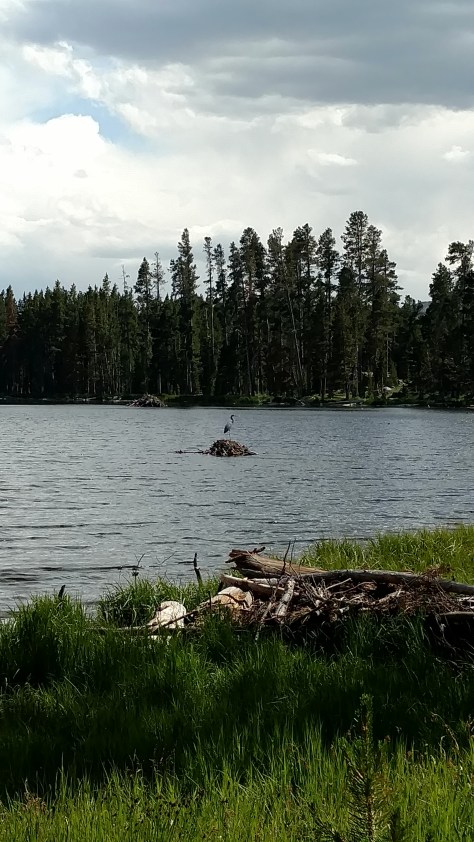
We made our way to FR 300 through the Shoshone National Forest and to the Fiddler Lake CG. There were a couple of beaver dams visible from out campsite, but the beavers were gone. The camp host told of the duel they had last year where he would break open their dams in the morning only to find then fixed the next morning. He thinks the Forest Service trapped them to work another area that needed some dams in another part of the state.

IMG_20160719_160924633

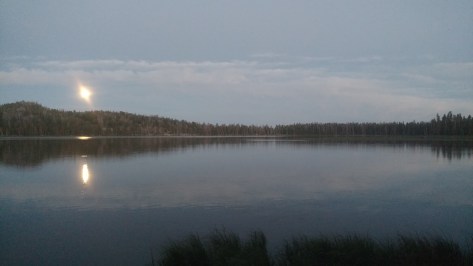
The full moon came up over the lake that night.

IMG_20160719_211201464

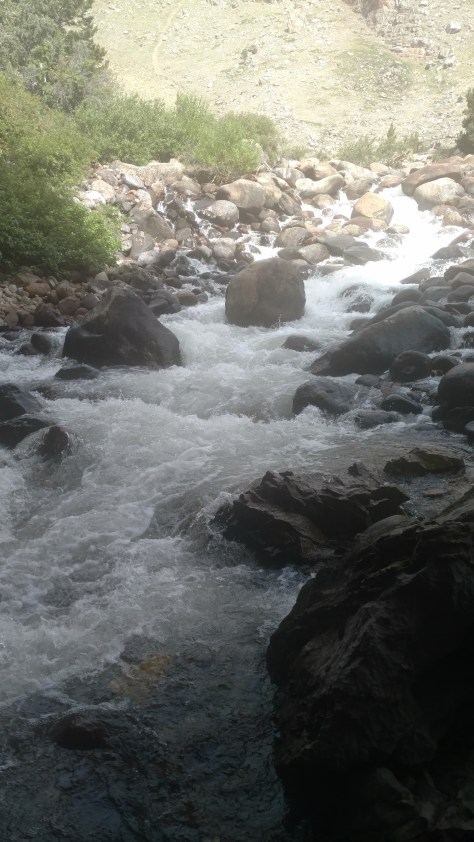
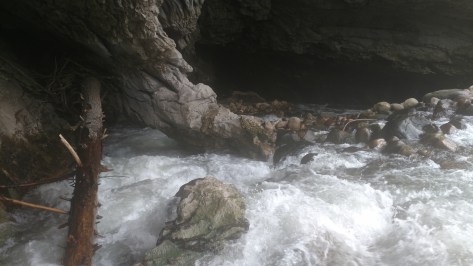
On the way out of the forest we drove through Sinks Canyon State Park, where the Popo Agie River runs into a rock cave and reappears ½ mile away out of the ground further down the canyon.

IMG_20160720_101056226

IMG_20160720_101105317

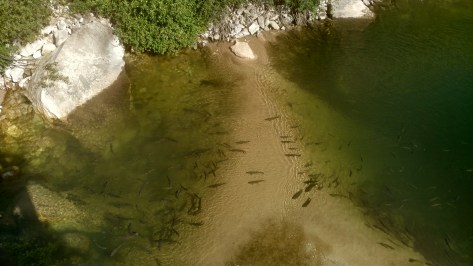
The fish swim upstream and get to where the river reappears, but can’t continue. There were some nice fish in there, but no fishing is allowed in the pool next to the opening because it would not be fair. It would be like fishing at a hatchery.

IMG_20160720_095016210_HDR

IMG_20160720_095024561_HDR

We then continued north to visit some friends in Wyoming and Idaho.

Our Own Oregon Trail

Originally, the plan was to get to Salt Lake City from the lava beds in northern California. We thought we would drive across the northern part of Nevada, but in looking at the map noticed very few roads and even fewer interesting places to stop along the way. Instead, we headed north to Bend, OR. While we have visited many national parks and monuments so far on this trip, we have not been to a single brewery. Since Bend boasts the largest number of breweries per capita, it seemed like a good place to correct this issue.

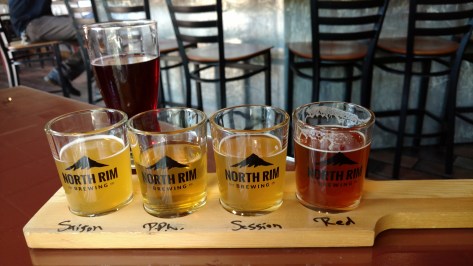
There is a Bend Ale Trail that includes 16 of the local breweries in Bend and the surrounding area. We ended up visiting 8 of the 16 during our time around Bend. For the Ale Trail all you need to do is show up at the brewery and get your ale trail passport stamp, but what’s the fun in that? We sampled their beer flights and food in the breweries we visited over the weekend to appreciate their craft.

IMG_20160710_114044729_HDR

All the breweries had a different vibe and distinct tasting beers. Luckily, Pam and I have opposite tastes in beer so splitting the flights always works for us. She likes the lighter and fruitier beers. I like the darker porters and stouts. We typically have to share the ales, unless it’s a Scottish Ale like Four Peaks’ Kiltlifter, then she gets those since that is her favorite.
IMG_20160709_145816637

Bend itself was a nice town with a Summer Festival going in the downtown section that made parking challenging with the Roamer, but doable if you didn’t mind walking.
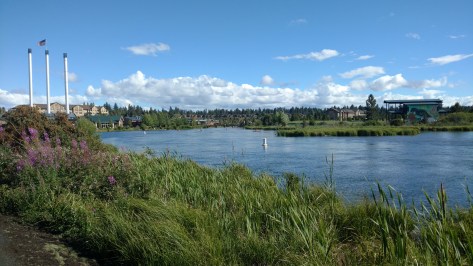
IMG_20160709_170106129

As with many nice, small western towns, rich Californians descended, drove up the prices and increased the traffic so that all of the original locals that helped to make it a great place now want to leave. There are a lot of outdoors activities around Bend, and with national forests to the north and south of Bend, we camped one night to the north in the woods outside of Sisters, OR….
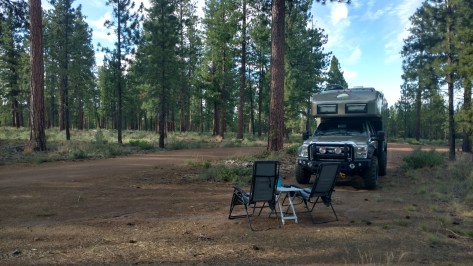
IMG_20160709_182525326_HDR

… and camped the next night to the south of Bend near the Newberry Volcanic National Monument.
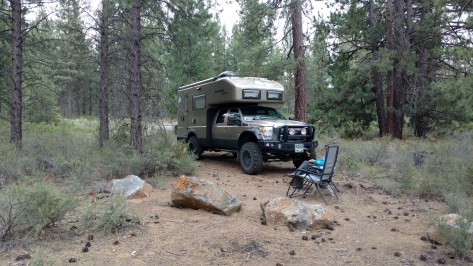
IMG_20160710_174924316

We visited the nearby High Desert Museum and the National Monument. The museum had some interesting exhibits, many sculptures around the grounds and live animals and birds. This was one of the sculptures made of barbed-wire.

IMG_20160710_152724571

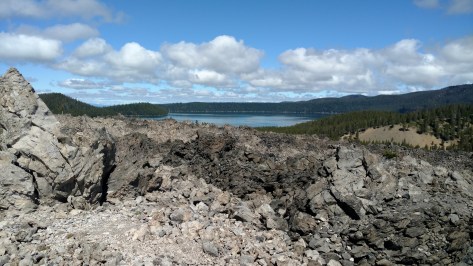
We drove up to Paulina Peak, just south of Bend, which is now part of the Newberry National Monument. The area had two beautiful lakes in the caldera of the old volcano, and an obsidian mountain, which was a result of the most recent volcanic flow a few thousand years ago.
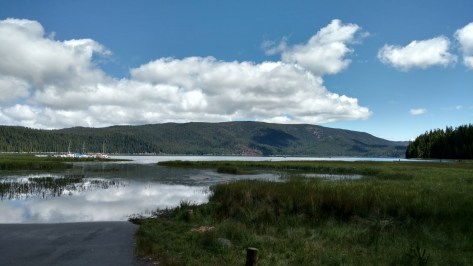
IMG_20160711_113444761_HDR

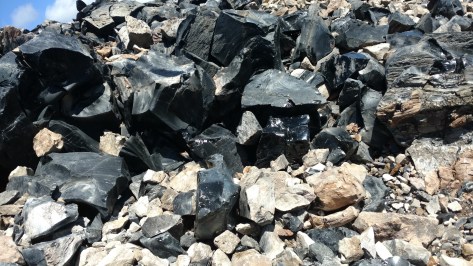
Obsidian and pumice are nearly the same rock differing in the amount of silica. The mountain was a mixture of both where silica rich veins created beautiful obsidian rock, or volcanic glass formations for hundreds of yards.
IMG_20160711_105643553

Obsidian rock can be sharpened to a single atom thickness, much sharper than steel, so it’s no wonder early knives and arrow heads were made of the rock.
IMG_20160711_110410095

You all should now realize that Pam and I will be unbeatable in trivia contests from now on – lol.

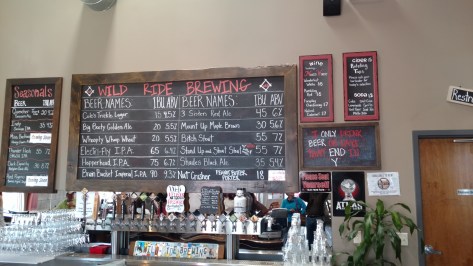
On our way out of Bend we hit the best Ale Trail brewery (in my opinion), located just north of Bend in Redmond, OR. Wild Ride Brewery had the best assortment of really good beers.
IMG_20160711_124529629

We ended up two brewery passport stamps short of getting a commemorative Ale Trail glass so we’ll have to head back to Bend sometime in the future. We also need to return for Atlas Cider, which is also in Bend. While not on the Ale Trail I had one of Atlas’ blackberry ciders at one of our stops that put a lot of the beers we tasted to shame, especially the weak pilsners, pale ales and saisons.

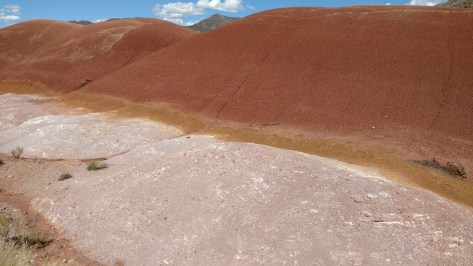
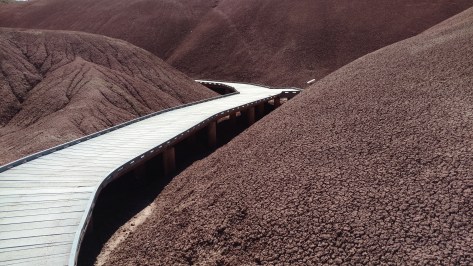
We then headed towards eastern Oregon on a two-lane rural road, Route 26, through some beautiful country. We ran into the John Day Fossil Beds National Monument along the way and had to stop. It had a little of everything to see: colorful landscapes in the painted hills…
IMG_20160711_152833304

IMG_20160711_152308343

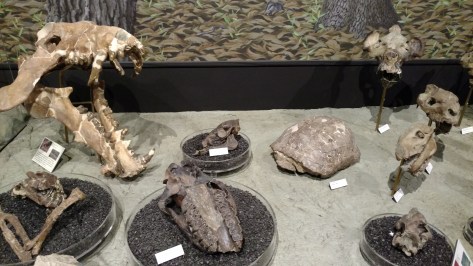
… along with fossils uncovered in the local area.
IMG_20160711_164720694

Since it was closing time when we were done hiking and looking around, we asked the rangers for camping spots nearby. There was one close, but it was explained to us as being “five miles up a nasty dirt road into the mountains”, to which Pam and I both replied – “Perfect”.

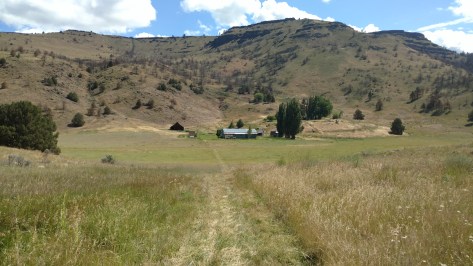
The place is called Lands End and it’s a family owned homestead with its own hangar and grass runway situated on a beautiful mountain meadow. Being there mid-week we were the only guests, but it’s typically packed on the weekends. They are already booked with 50-some campers during the Aug 2017 solar eclipse. It would be a great place to see the eclipse.

IMG_20160712_080718887_HDR

The couple who now own and run the place moved back to the family homestead from Seattle about 30 years ago. He brought the old wood and sheet metal hangar from the Seattle area. He said he was going for the rustic look. Pam jokingly told him he nailed it. The hangar housed three planes, fifties style diner seating and much more. As the sun rose and set the sheet metal hangar creaked and groaned as if trying to move across the field.
IMG_20160712_104637218

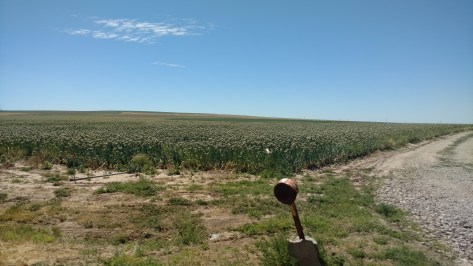
The next day we took off for the Snake River and the Idaho border. We drove through more beautiful farm country and camped along the Snake River for the night.
IMG_20160713_142734599

We followed the Snake River through Idaho farm country along route 30. At one Snake River overlook was the path of the old Oregon Trail. The seven month wagon train trail ran from Kansas City, Missouri, through Salt Lake City to Oregon. We wondered how many folks became Mormons along the trail and stopped at SLC just to end the trip.

IMG_20160713_130518461

Just east of the overlook was Thousand Springs, where amazing amounts a water come gushing out of the rock wall of the Snake River in waterfall cascades. It is not what someone would expect for such a dry area (away from the river), but really beautiful. We should have taken a picture of the area, but we didn’t. So you’ll have to see it for yourselves.

We finally made it Pam’s brother’s place in SLC. We had our tires rotated, completed a Ford recall software upgrade for the truck and just relaxed for a few days with Nali and Maizy (Allan’s two dogs).

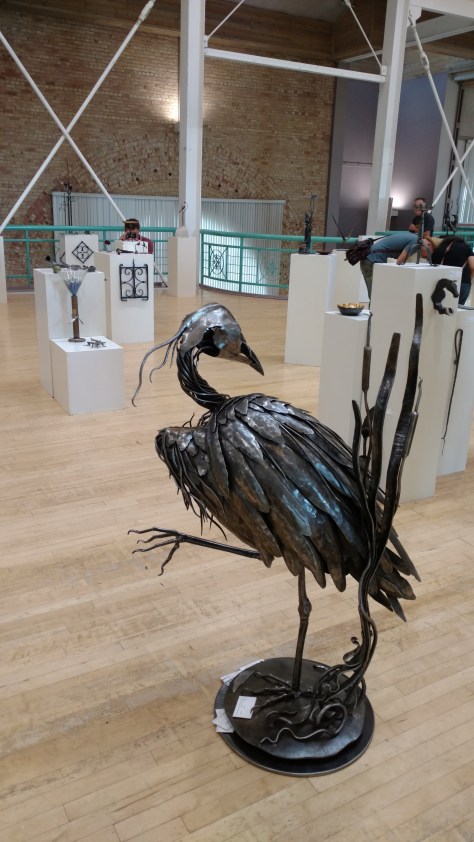
The North American blacksmith convention was in SLC so we went there to check out some of the pieces. A couple of the Phoenix area blacksmiths that I’ve worked with were there and I introduced them to Pam and Allan. Their forge is where I’ve been known to disappear for a weekend or two.
IMG_20160715_191725562

IMG_20160715_193454040

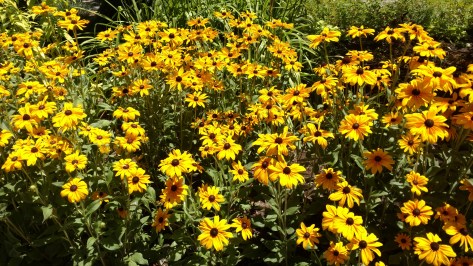
We also checked out the Red Butte gardens at the University of Utah, where Allan’s girlfriend works. The grounds were beautiful and we could have stayed in the herb garden forever it smelled so good.
IMG_20160716_134151990

IMG_20160716_142209281

We’ll be leaving SLC and heading into Wyoming on the next leg of our trip.
Mt Whitney and the High Sierras

We traveled down to Mammoth Lakes on the Friday before the 4th. It was packed and all the campgrounds full (thankfully). We ended up doing laundry and having some pizza and beer before heading over to the ranger station. They gave us a map of the forest roads on the east side of HWY 395. We found a beautiful spot and had the valley to ourselves for the evening.

IMG_20160701_145104773

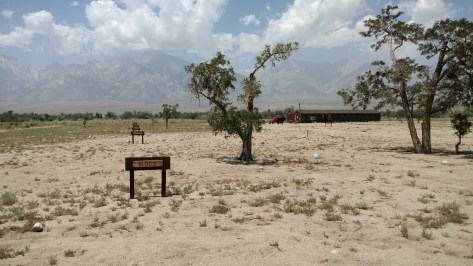
We made our way south and stopped at Manzanar National Monument. It was one of the camps used during WWII to relocate Japanese immigrants and first and second generation Japanese-Americans away from the west coast. It was a very sobering experience to think what these 120,000 people were put through, many of them US citizens.

IMG_20160702_120445400

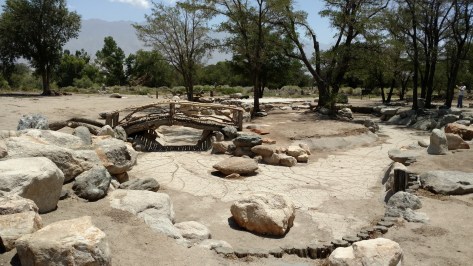
They built beautiful parks within the barbed-wire camps that have now become barren.

IMG_20160702_121402238

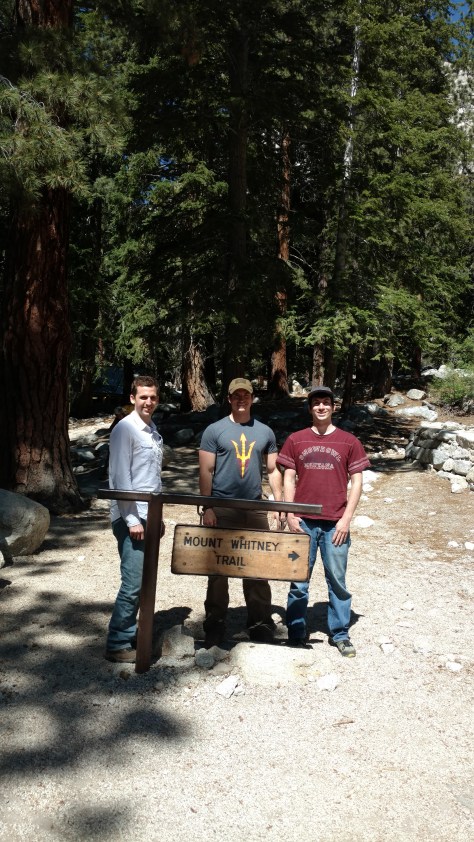
We arrived at Lone Pine CG and our two sons, Tom and Taylor arrived a little later with Tom’s friend Nick. The three were going to climb the 22-mile route to the top of Mt Whitney (14,500 ft) in a single day. From left to right in the picture are Nick, Tom and Taylor.

IMG_20160703_102532084

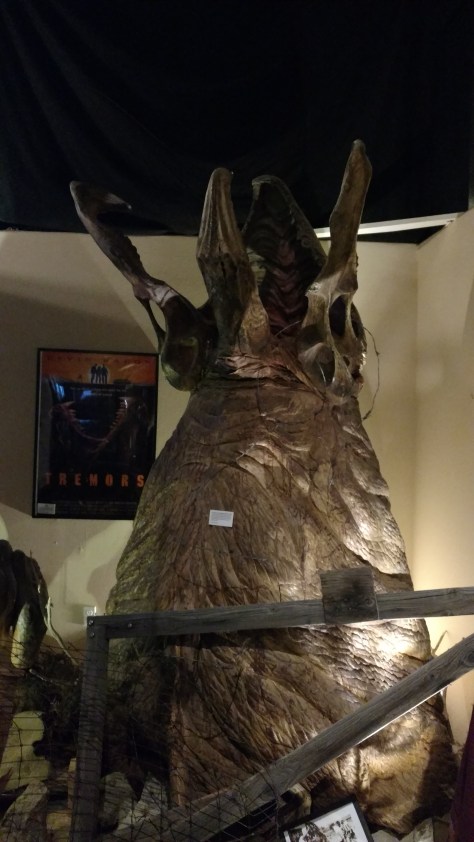
We visited the town of Lone Pine and learned of its Hollywood significance. Hundreds of western movies were shot outside of Lone Pine, and some of classics as in Tremors.

IMG_20160703_120010075

We fed them well and they left the night before for the trailhead to get used to the altitude. This was Tom’s version of an EarthRoamer as they headed up to the trailhead with the tent.

IMG_20160703_193355048_HDR

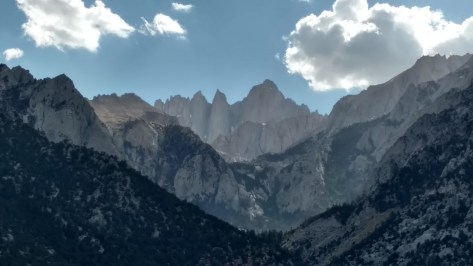
From our camp the mountain looks very majestic.

IMG_20160702_171004269_HDR

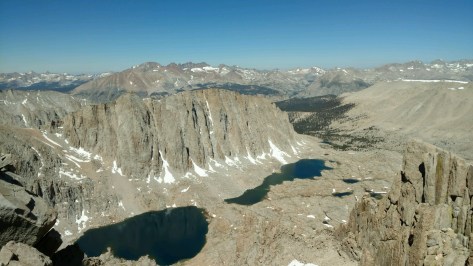
This is a picture from the top by Taylor looking towards the west and into the Sequoia National Park region below. They were all beat from the hike, but were fine the next day. Oh to be in your 20s again. It looked like a breath-taking hike, but I think a two or three day trip would be more enjoyable than 22 miles in a single day.

344

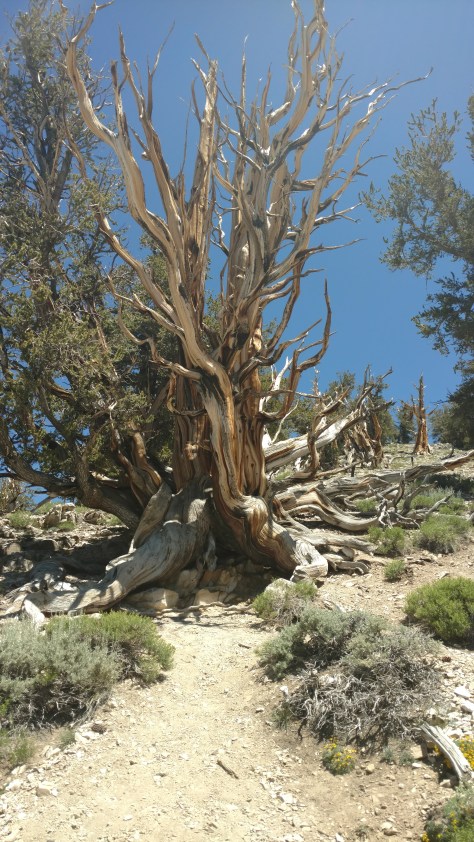
The three headed off for their respective homes while Pam and I headed north. We stopped at the ancient bristlecone forest in the hills above Big Pine. The forest was used to understand weather patterns from the growth rings over the last few thousand years. The oldest known tree is located in this forest.

IMG_20160705_115653387

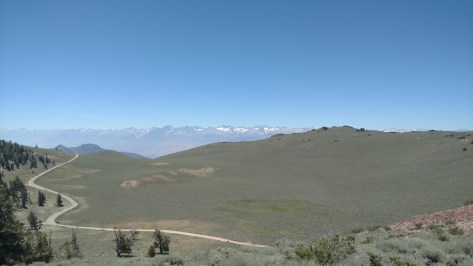
The view to the west of the Sierra range from the forest was amazing.

IMG_20160705_120923013

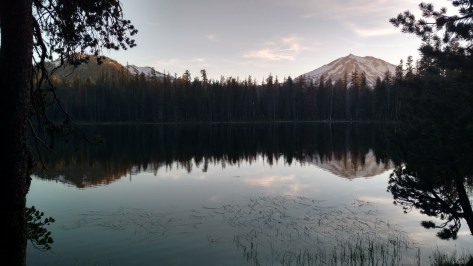
We made our way to Lassen Volcanic National Park and the Summit Lake North CG. We had a spot next to the lake and enjoyed a beautiful sunset.

IMG_20160706_201601117_HDR

Looking across the lake was Lassen Peak, a volcano that blew several times between 1914 and 1915. The largest eruption in 1915 destroyed an area that was 100 times smaller than the Mount Saint Helen’s eruption. Lassen, Shasta and Hood all look very similar as plug-dome volcanoes go, where Lassen is the largest in the world.

IMG_20160706_201759340_HDR

Near the top of Lassen Peak, the lakes were still frozen and there was several feet of snow still to melt.

IMG_20160707_080420719_HDR

The hike we wanted to do to Bumpass Hell was closed due to snow. The trail is one you need to stay on or you’ll break through the crust and into the boiling mud below. This boiling pot was from an area called Sulfur Works, a similar geothermal area as Bumpass only smaller.

IMG_20160707_083449723_TOP

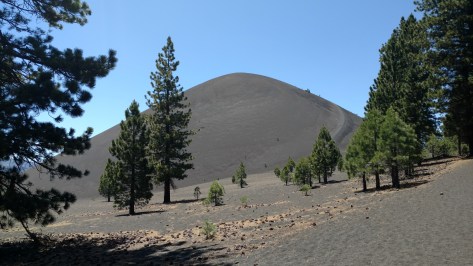
Needing a hike, we took off to the other side of the park to climb the cinder cone volcano. This was the site of the original national monument, but after Lassen’s 1915 eruption the area was expanded and made into a national park since it contains all four of the different types of volcanoes.

IMG_20160707_121904062

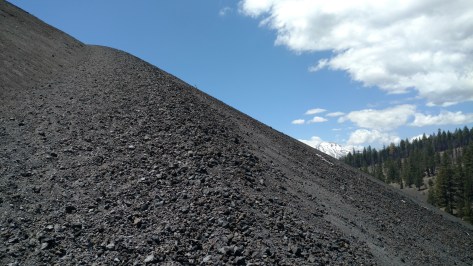
The cone hike looked simple until you got there and realized it was nearly straight up on a bed of cinders that makes hiking in sand seem easy.

IMG_20160707_123437020

The view from the top was worth it and the trip down was very easy.

IMG_20160707_125539639

We continued north looking for Glass Mountain, a lava flow obsidian mountain just south of Lava Beds National Monument near the Oregon border. We never found the mountain, but drove through a beautiful section of forest just south of the mountain and camped there for the night.

IMG_20160708_080248655

We headed into Lava Beds NM the next day and after a discussion with the rangers we realized our error the day before with respect to Glass Mountain (turned one forest road too early). Lava Beds NM is a huge lava field with many lava tubes to explore. Some are as big as a subway tube and others you need to crawl into. We skipped the latter. We did explore enough to earn a cool “Lava Bed Explorer” sticker for the truck.

IMG_20160708_094750377_HDR

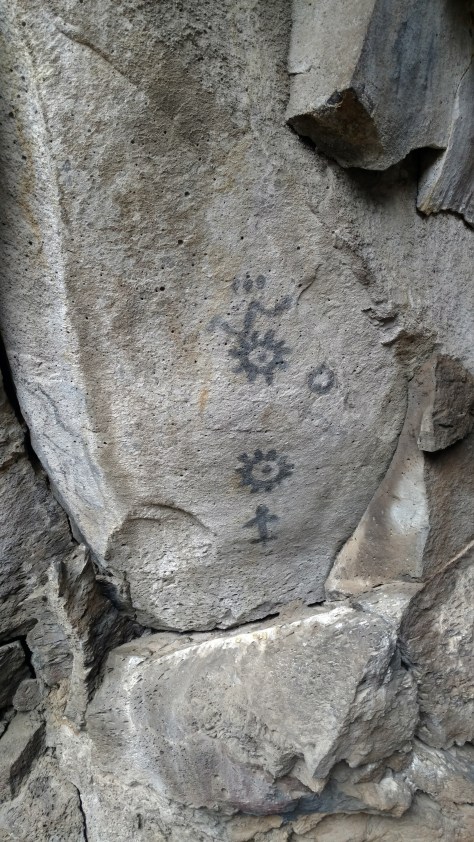
The native Modoc indians used the caves for many purposes. Some had pictographs as shown below and some of the caves had year-around ice for food storage.

IMG_20160708_111320439

We left the NM and crossed into Oregon. The south-central area was covered in beautiful farmland. We jumped into the forest south the Bend, OR and camped for the night.

IMG_20160708_180241382

Crossing the Border into California

We continued across Nevada on HWY 50. The western side of the state is drier due to the higher Sierra mountains to the west. Outside of Fallon, NV is the 600 foot Sand Mountain. If you zoom in on this picture you will see an ATV just below the crest to give it some perspective. The mountain is the wind-blown remains of the ground Sierra quartz that washed into the valley from the receding glaciers that covered this part of Nevada 10,000 years ago. Around 30,000 folks now visit the site a year to have fun in the sand.

IMG_20160625_111815953_HDR

As the scenery along the highway became sparse, we stopped to read more of the historical signs posted along the road. HWY 50 was the Nevada route used by the Pony Express in 1860 between St Joseph, MO and Sacramento, CA. Several of the “Pony” stops, which were roughly 20 miles apart along the route, can still be found today. The “Pony” was a private business that only lasted 18 months with the completion of the telegraph lines that followed this same route.

IMG_20160625_112406313_HDR

The Overland Stage also used this route along HWY 50 until the turn of the century and was part of the Lincoln Highway, the first transcontinental road. Somewhere along the line the road was by-passed by the new interstate system, and like Route 66, is now just part of history, and a much more interesting route to travel if you have the time.

We gave the Roamer a wash in Fallon, NV, knocking off the caked on mud and pine pollen from the previous weeks. We found a place by the river to camp at Fort Churchill CG, trading pollen for cottonwood snow – lol.

IMG_20160625_181312780

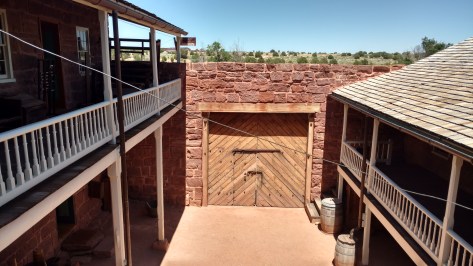
Fort Churchill was a western fort in the 1860s made of adobe and wood to provide a base for the military presence in western Nevada during the mid 1800s. The remains of the buildings still stand today.

IMG_20160626_101454707

We took the dirt road west towards the California border and passed the NATC – Nevada Automotive Test Center. Every type of military vehicle was there and the roads into the hills looked like they put them through some good tests. The guy at the gate gave the Roamer a good look as a possible future test vehicle.

IMG_20160626_114530349

We hit the Nevada side of Lake Tahoe on a Sunday afternoon. Lake Tahoe is a large, deep, beautifully blue lake. According to the local paper, if you drained Lake Tahoe it would cover the entire state of California with over a foot of water.

The steep slopes into the lake makes any level land around the lake at a premium for use. There were hundreds of vacationing people and parked cars all along the winding roads that surround the beautiful lake. We headed up into the hills just above Incline Village and found a nice little campground called Mt Rose CG.

IMG_20160628_094416419

It had just opened for the year the previous Friday due to snow – yeah snow. There was still snow all around but it was melting fast.

IMG_20160627_163452666

There were a few Uinta Squirrels there that had fallen food recovery down to an art form.

IMG_20160626_163221550_HDR

We had a nice hike to a nearby meadow in the mountains.

IMG_20160627_160533882

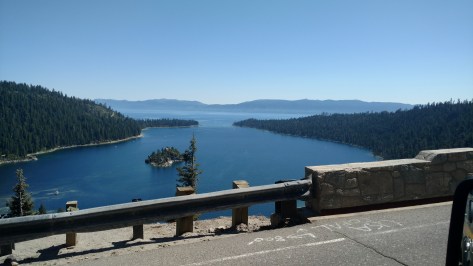
We took the long way around Lake Tahoe as we left to see as much as we could. Emerald Bay was beautiful and may be a future stop. We did stop at the USFS Ranger station and got some tips on where to camp in the future. She did say that the July 4th weekend is not the time to be there, where in her local area the population goes from 5,000 folks to 100,000 folks – yikes! Luckily summertime road construction was in progress to help with the traffic – lol.

IMG_20160628_105957034

We stopped in South Lake Tahoe, which is in California, to stock up with food for the upcoming weekend with the boys. We then hit the California Border Inspection Station south of town. We were singled out of the line of vehicles for further inspection of produce, wood, plants, and animals. We had a good chat with the inspector, having entered California on previous trips and knew what to expect, but after I had to wonder what “border” did we cross.

We then climbed over Monitor Pass along HWY 89 and stopped for a nice lunch near the top before dropping down onto what I consider one of California‘s best roads, HWY 395.

IMG_20160628_140035961

As we traveled south, clear blue skies of the last week gave way to a nice summer storm over Mono Lake.

IMG_20160628_151623622

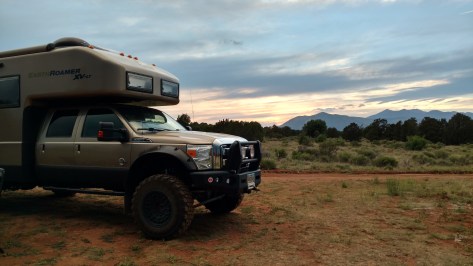
Luckily we stopped to read the “you are here” map at the lookout and saw that there were BLM campsites up Lundy Lake road not shown on our map. We headed up the canyon and were surprised at the beauty of Lundy Lake.
IMG_20160629_101451180

We found a nice camping spot down by the river below the lake, after we made it through the trees.

IMG_20160628_161514160_HDR

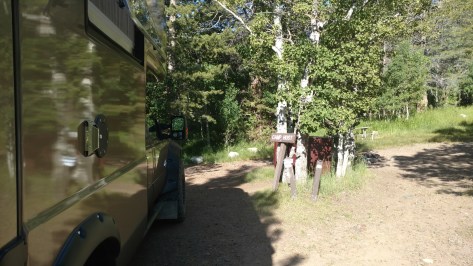
We knew had picked good spot because someone left the “CAMP HOST” sign with a new envelope on our post sometime in the early morning for whoever was going to host for the upcoming holiday weekend.

IMG_20160629_084109464

We then headed for Bodie, CA – a mining town that peaked at around 10,000 folks in the late 1800s and ended mining operations in the mid 1900s. While it’s called a “Ghost Town” we were there with about 200 other folks walking around town.

IMG_20160629_111814844

The place had a lot to see, even Prince Albert in a can!

IMG_20160629_112327670

Our next stop was Mono Lake, with its structures that were the submerged calcium carbonate spires that formed around the lake spring sources. These are now visible because the water level is much lower since LA has been pulling water from as far away as here since the 1940s.

IMG_20160629_134037349

There was a forest fire that recently burned around Lee Vining and up the mountainside. Fire crews were still all over the place putting out the last of the fires.

IMG_20160629_134103690

We are camped now at June Lake Beach CG, another beautiful lake in the high Sierras.

IMG_20160630_090243266

May be tough to find a place to camp in tomorrow given the holiday weekend and no reservations, but we’ll meet up with the boys in Lone Pine on Saturday for a few days.

Entering the Great Basin

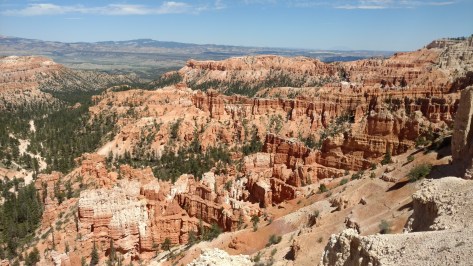
We packed up and exited the Grand Staircase-Escalate NM, heading west along picturesque HWY 12. We ran into Bryce Canyon NP and stopped in for a nice Father’s Day lunch at the lodge. We’ve bought the NP annual pass for the last three years, which allows us free admission into all of the parks. During our travels the pass has paid for itself many times over. It’s nice knowing you can just run into a national park, have a good lunch, refill your water, catch a few incredible sites and leave without feeling like you should have done more.

IMG_20160619_151922282

Bryce, while extremely beautiful, was filled with a zoo of people. More folks were jammed into the parking lot and visitor center area than we had seen in total since leaving Arizona a week ago. We were glad to exit the park after only a couple of hours.

IMG_20160619_151949455

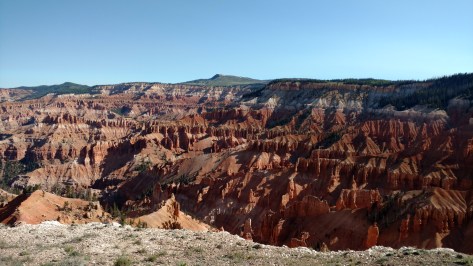
We camped a little west and at a little higher altitude compared to Bryce at White Bridge campground next to Panguitch Creek. The next day was our laundry day so we headed to Cedar City. The road took us past Cedar Breaks NM so we stopped in for a look before we dropped down from 10,000 feet into Cedar City.

IMG_20160620_145742276

After laundry, food and gas provisioning in Cedar City we headed back up to Cedar Breaks for a nice afternoon hike. The last time we were in Cedar Breaks was nearly 20 years ago when we were skiing at Brainhead, which is nearby, and took an afternoon off from downhill to cross-country ski into Cedar Breaks during the winter. It looks even better with snow on the colorful rocks.

IMG_20160620_091822594

We camped the night at Cedar Canyon campground, on the hill between Cedar Breaks and Cedar City. We learned it’s never a good idea to camp near a 12% grade hill.

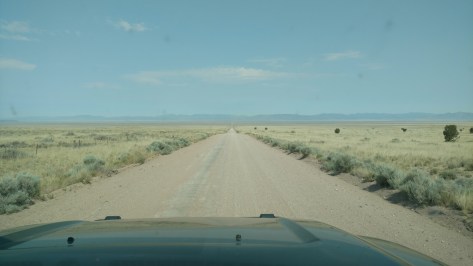
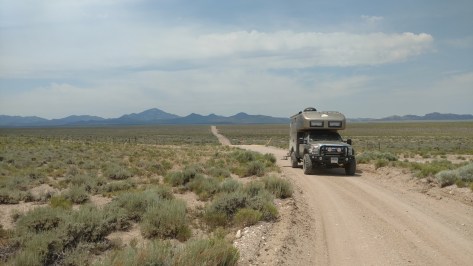
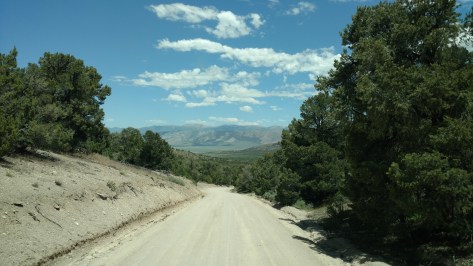
We took off the next day across western Utah using a less traveled route; the Lund Hwy and the Pine Valley Road to get to Baker, NV. Both roads are nice dirt roads that pass through some very beautiful country.

IMG_20160621_103356038

We stopped for lunch along the way. No need to worry about traffic out here.

IMG_20160621_122543451

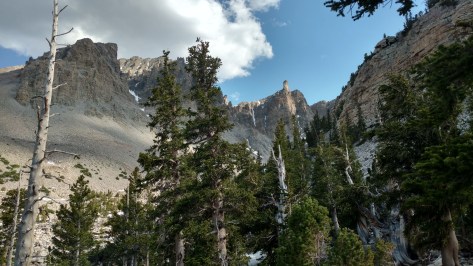
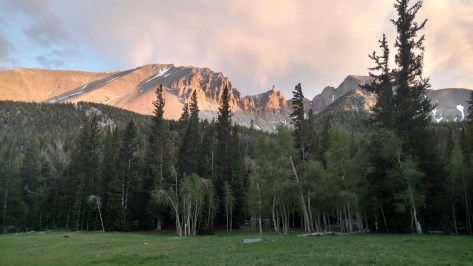
We entered Nevada and The Great Basin National Park. Neither of us had been there before and really had no idea what to expect. We were both nicely surprised. While the great basin is the bowl surrounded by mountains that encompasses most of Nevada, the park itself sits in the 13,000-foot Wheeler Mountain range, and not in a lower altitude basin.

IMG_20160621_163900389_HDR

The Wheeler campground is at 9,800 feet and was nice and cool given the heat wave hitting the rest of the southwest. There were many trails from the campground and we did the hike to the high altitude bristlecone pine forest, where the trees are over 2000 years old; the oldest close to 5000 years old.

IMG_20160621_164431209_HDR

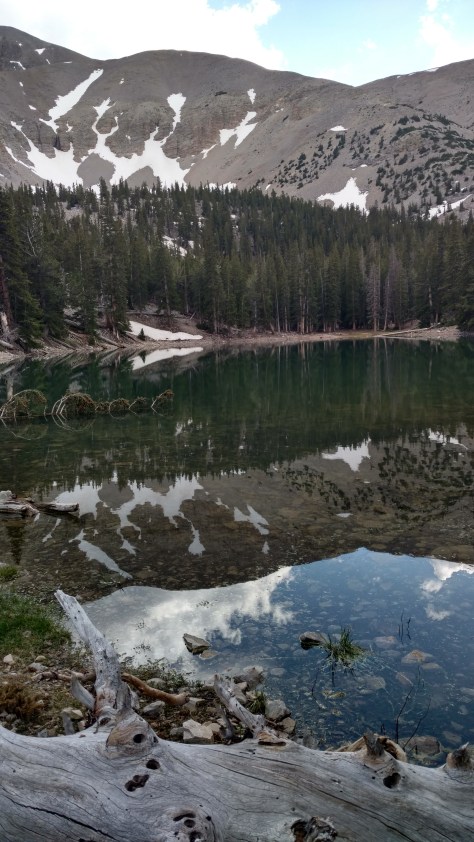
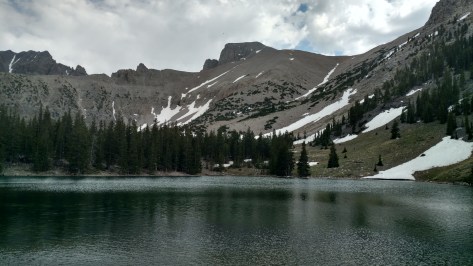
The hikes to the alpine lakes were gorgeous too.

IMG_20160621_171235359_HDR

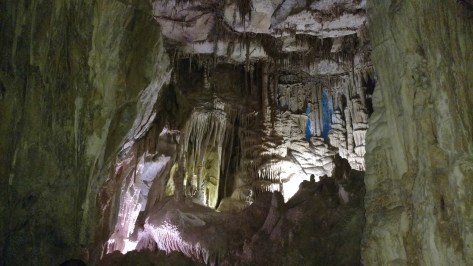
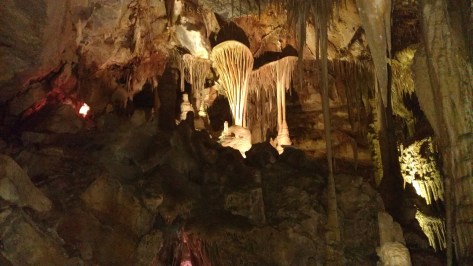
The park also has beautiful limestone caves that are full of beautiful cave structures.

IMG_20160622_090902784

IMG_20160622_100425392

The second day we even got a little rain during a hike to one of the lakes.

IMG_20160622_163444763_HDR

There were a lot of deer in the park enjoying the cool weather and the new grass.

IMG_20160622_163056530_HDR

The sunset from our camp was not bad either. It’s so out of the way that the park was not crowded and definitely a place to revisit.

IMG_20160621_195156659_HDR

We then took off west across central Nevada on HWY 50, known as “The Loneliest Highway in America”. The central Nevada countryside was beautiful with large green valleys covered in sage and desert brush, between the many mountain ranges that run north to south.

IMG_20160623_110307191

We pulled off the highway past Ely, NV to have lunch at Garnet Hill Rec Area. We didn’t find any garnets, but it is a huge mining area and the garnets are around according to the information board there.

IMG_20160623_131430502

We continued on just a little further west to Illipah Reservoir for the night, a BLM campground that was pretty and quiet.

IMG_20160623_194829771

In the morning we headed into the hills to the mining ghost town of Hamilton, NV. Once a silver mining town of 12,000 people, the town is now just a memory since the mine stopped producing in 1870.

IMG_20160624_095728893

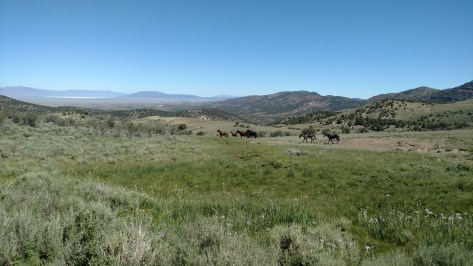
We did see a herd of wild horses on the road into Hamilton.

IMG_20160624_101926258

We made our way to Hickison Petroglyph Rec Area west of Eureka, NV for the night. We hiked the trials to see the great basin petroglyphs and the scenery.

IMG_20160624_132717596

IMG_20160624_133404177

We’re about in the center of Nevada now and will be making our way to the California border and Lake Tahoe.

Grand Staircase-Escalante

We left the north rim traveling north towards Utah. We stopped at Pipe Springs National Monument just outside Fredonia, AZ. Pipe Springs has a rich history of the native Paiute Indians and Mormons settlers dating back to the 1850s. The spring was the only source of water for many miles.
Because of its strategic location, nearly half way between Zion and the Grand Canyon, Mather made it a national monument in the 1920s and put in place an equal water split between the Paiute Indians, the local ranchers and the US Government that is still in place today.

IMG_20160614_134202722

The “castle” built there was a sanctuary for Mormon wives. The cattle given to the church grazed the local fields for many years. It even had a telegraph office that connected the outpost with St George and Kanab.

IMG_20160614_132755089_HDR

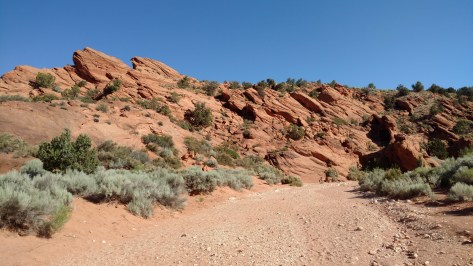
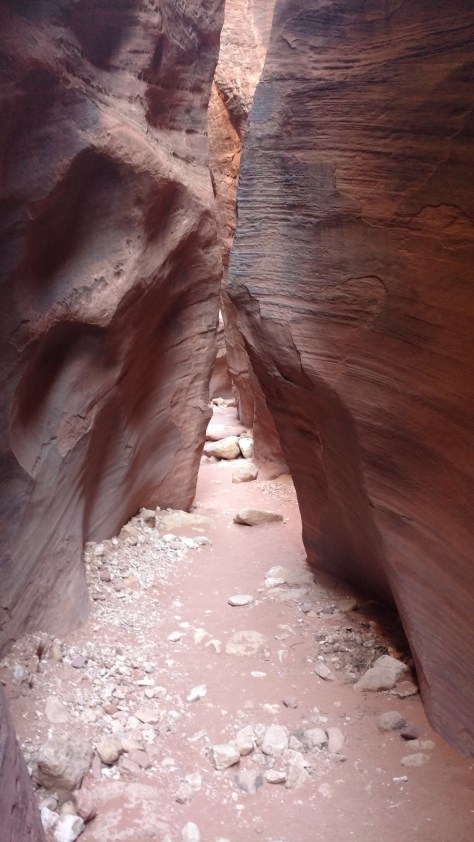
We then headed to Stateline CG along the Arizona / Utah border on the northern end of the Vermillion Cliffs. We spent the night there and hiked Wire Pass trail into the Paria Canyon. The entrance is just north of “The Wave” so the rocks are very interesting.

IMG_20160615_090643668

The slot canyon was nice and cool in the shade, but some light made it down to the ground.

IMG_20160615_092641588

We then took off north up Cottonwood Canyon road that runs up the Grand Staircase-Escalante National Monument. The drive was beautiful and the skies were clear. Last year we attempted to make the drive and the local rangers advised against it due to rain. Sections of the road have a clay mud that binds into your tire tread and then you just skate along the road. We ran into some back-country horse riders that said they were caught on the road in the rain and their trailers all jackknifed on them on the down hills.

IMG_20160615_142842722

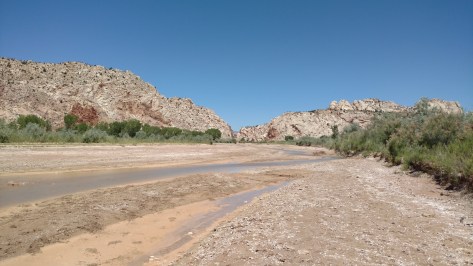
We stopped to do a couple hikes. The first ended in a river bed so we turned around.

IMG_20160615_121342669

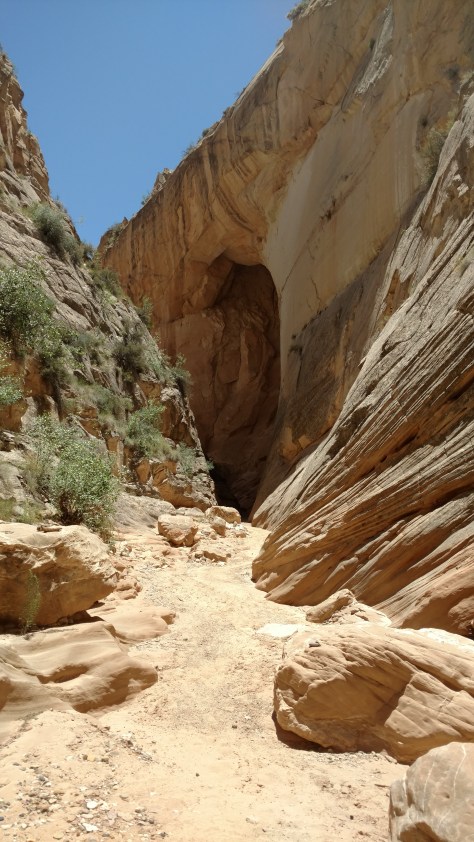
We then hiked the cottonwoods narrows which was very beautiful.

IMG_20160615_133905031

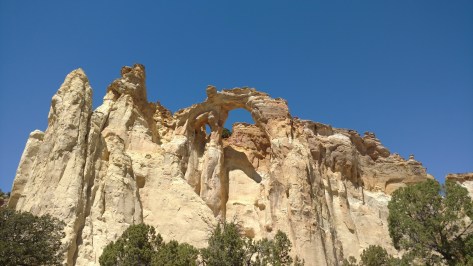
We made our way to Grosvenor’s Arch and found a nice juniper grove just over the hill from the arch to camped.

IMG_20160615_145837659

The next day we hit the north end of the drive and Kodachrome Basin State Park, where we stopped to do a hike.

IMG_20160616_090407451_HDR

They had two campgrounds there. One in the basin that was full of RVs and another in the back-country that seemed to be more our style, but it was early in the day so we continued on.

IMG_20160616_085158183

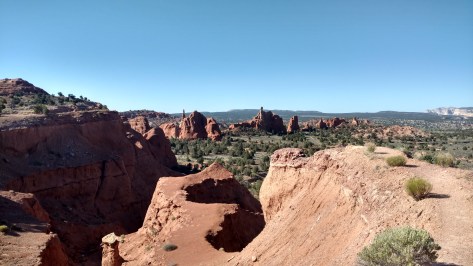
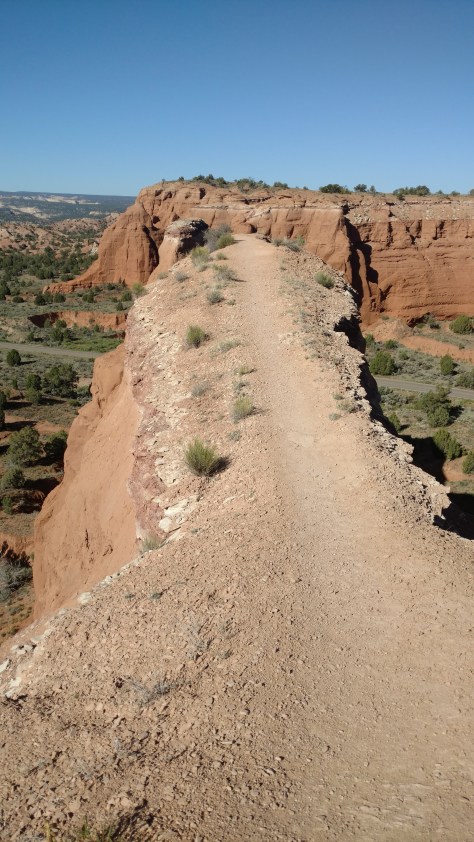
The hike had a few photo spots that led out to some interesting points. The sign at the trail entrance said to stay 10 feet from the side rock sides, but this does not look 20 feet wide. You do get some good pictures though.

IMG_20160616_085755593

We then made our way to Boulder, Utah and to one of our favorite restaurants, Hell’s Backbone Grill, for lunch. Everything is grown locally, tastes great and the ambiance of the place makes it even better.

IMG_20160616_115843721

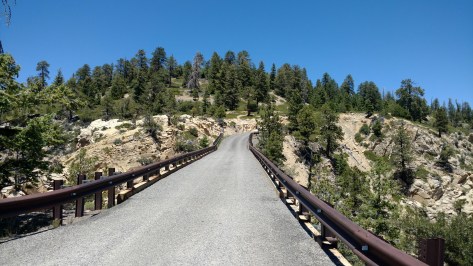
The restaurant is named for the road that was constructed in the 1930s by the CCC to finally connect Escalante and Boulder, Hell’s Backbone Road, separated by incredible rock formations. Now the two towns are connected by the paved and very scenic Hwy 12 that slices through amazing rock formations. The old road is now just a dirt forest road that is a great drive, so we took it. It takes the long way around the rock gorge up through the mountains and jumps the 800-foot gorge by a single lane bridge, Hell’s Backbone Bridge. It’s hard to explain the beauty of what it looks like off to both sides of the bridge so I’ll leave that for you to come see for yourselves.

IMG_20160616_132831704

We made it about half way along the road and stopped at Blue Spruce CG for the night. It was a great spot along a brook and at a higher altitude for a cool night in the pines. We had a nice campfire and watched several deer feed all around us for our entertainment.

IMG_20160616_200540807

We then headed south out of Escalante on the Hole-In-The-Rock road, a 57-mile dirt road that runs all the way to Lake Powell.
We did some good hikes along the way at Zebra,…

IMG_20160617_133314675

Devil’s garden,…

IMG_20160617_153352436

Dry Fork Slots, stopping to camp along the way.

IMG_20160618_084514711

At the end of the road is “the-hole-in-the-rock” where in the 1880s Mormons looking for a faster route lowered 26 wagons and 280 people to cross the Colorado River, which is now part of Lake Powell.

IMG_20160618_200151857_HDR

We spent the night there under a beautiful moon.

IMG_20160618_211532868

Now it’s off to western Utah and Nevada.

North Rim – Revisited

We arrived home from our New Mexico trip to a heat wave that pushed the Phoenix temperatures into the 110+ degrees, way too hot for our liking. I smoked some chickens and pork before we took off to Prescott area and actually had trouble keeping the smoker cool enough in the valley weather.

We attended the yearly Orme school reunion and then went to our place on the rim, where Pam’s brother, Allan, made short work of a 30-foot ponderosa near the house. We now have fire wood for a year, once it dries out, and wood stump stools for the outside fire pit. Oh Yeah.

We dropped back into the sweltering heat again long enough to pack up and head north to higher and cooler climates. Our first stop was Walnut Canyon National Monument outside Flagstaff, AZ. We took our favorite route there, up through Payson and Lake Mary Road. When we crested the rim above Pine a mother bear and two cubs ran across the road in front of us. It was the first time either of us saw a mother with cubs in Arizona. Pretty Cool! The road passes by Mormon Lake and there was still quite a lot of water in the lake, which most always is dry by early June.

Walnut Canyon does not have camping within the monument, but the national forest around the place offered many places to camp for the night. You can see the San Francisco peaks in the background.

IMG_20160610_193243892_HDR

We watched a great lightning show roll in from the east and had the nice patter of rain for most of the night.

IMG_20160610_195031906

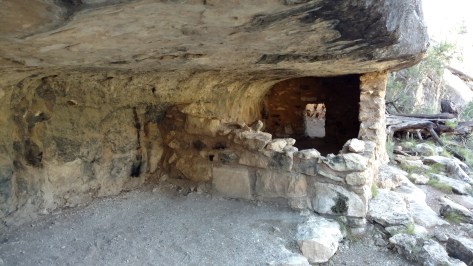
We were up early the next morning and at the gate as the ranger unlocked it and let us into the park. There are only a couple of short hikes in the park so we did them both. The canyon was the home to hundreds of Pueblos, where their homes were built into the rock faces, like a modern condo.

IMG_20160611_084132577

The canyon had many rock overhangs that were made into dwellings.

IMG_20160611_082135144_HDR

Many of the dwellings still exist today.

IMG_20160611_083048217

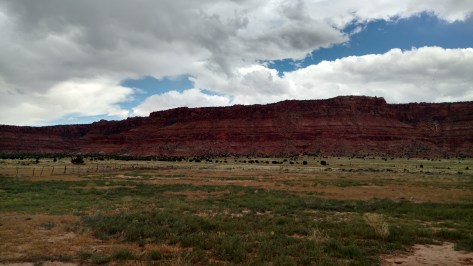
We left Flag and headed north to the Vermillion Cliffs for lunch. We parked at the condor release site, but only spotted a single condor circling in the air. Rain showers were passing through, which may have grounded the condors.

IMG_20160611_125126613_HDR

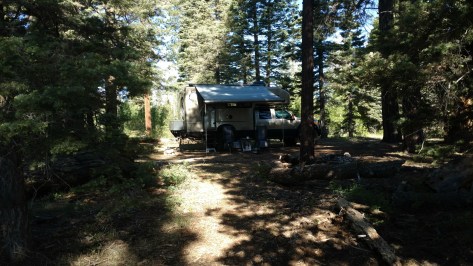
We jumped up onto the Kaibab Plateau and made our way to the north rim of the Grand Canyon. We pulled off into the Kaibab forest heading east before entering the park and found many beautiful spots to camp along FR 611.

IMG_20160612_075335332

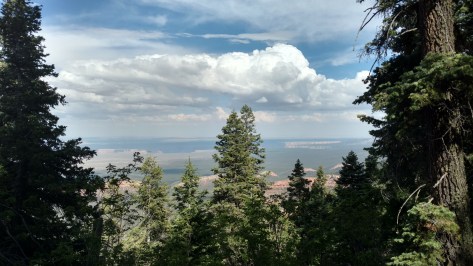
The overlook from this road is Marble Canyon, the Vermillion Cliffs and the eastern entrance of the Grand Canyon from Lee’s Ferry.

IMG_20160611_160111952_HDR

While we thought it was pretty spectacular a local squirrel didn’t care at all and just nibbled away at his pine cones in a nearby tree.

IMG_20160611_160357495_HDR

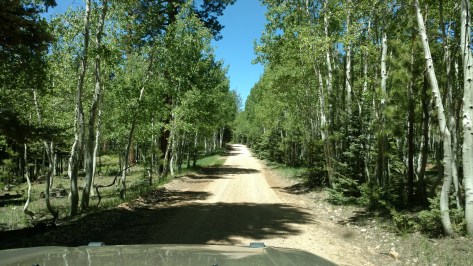
We then headed to the west side of the north rim and to the back country camp spot called Fire Point. It’s about a 17-mile drive through the forest and you cross into Grand Canyon National Park for the last mile of the drive. The north rim is about 1000 feet higher in elevation from the south rim and much different in vegetation. The fall is very pretty on the north rim due to the number of aspen trees that turn gold, orange and red along all the forest roads.

IMG_20160612_112110541

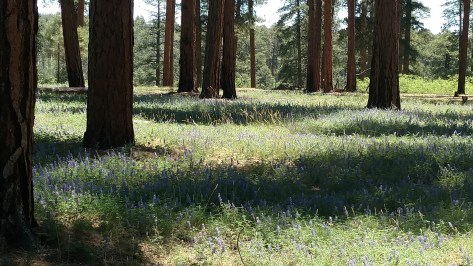
The park section of the drive is through a beautiful old growth ponderosa forest, where all of the trees have the golden orange bark and smell of vanilla. The ground was also covered in blue lupines.

IMG_20160612_120419065

The road snakes through the ponderosas and some spots require that the side view mirrors are pulled in.

IMG_20160613_100040151

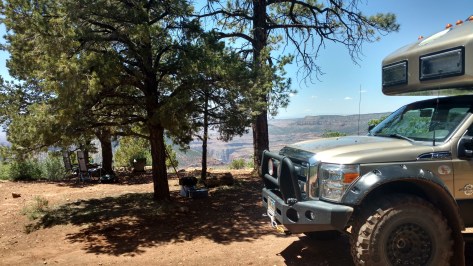
However, you get to park right next to the rim and it’s all yours (except for the folks who drop in during the day to check it out too).

IMG_20160612_132854962_HDR

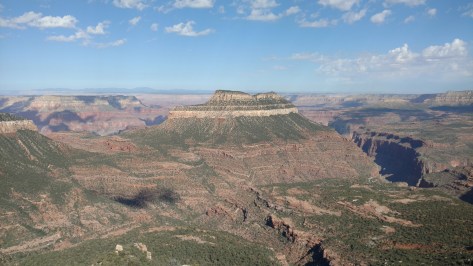
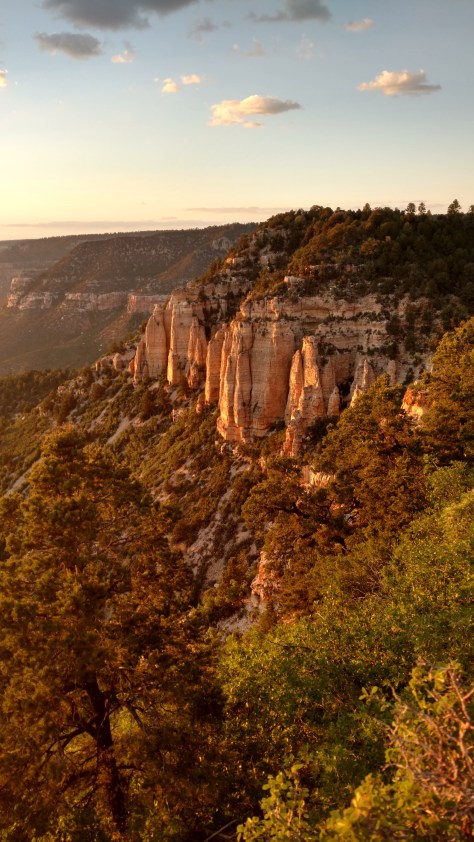
The view looks over a large section of the canyon to the west. To give some perspective, the shaded rock walls in the side canyon on the right are about 500 feet tall, and the near peak, Steamboat Mountain, is just over two miles away.

IMG_20160613_092132558

The rocks along the walls are all aglow as the sun sets.

IMG_20160612_203552506_HDR

This is a pretty nice campsite.

IMG_20160613_195229877_HDR

Now off to Utah and points further north.

Navajo National Monument and Canyon De Chelly

Pam and I dropped south out of Utah, through Monument Valley to meet up with Lou and Nancy at a place neither of us had been to before, Navajo National Monument. It’s located about 20 miles west of Kayenta, AZ, within the Navajo Nation.

Our view from the campsite was spectacular.

IMG_20160522_134326589_HDR

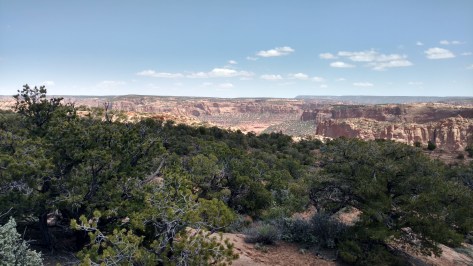
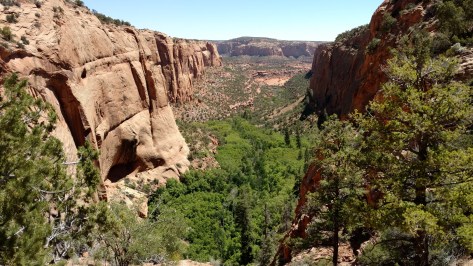
There were a couple of hikes you could do on the rim of the canyons. One was to a beautiful view up one of the canyons.

IMG_20160523_121508886

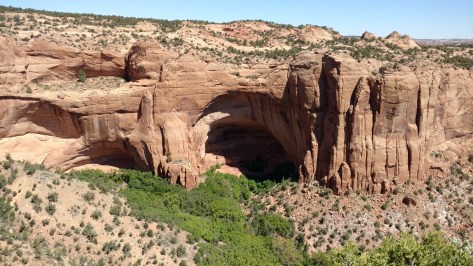
The other hike was to a view of the Betatakin ancestral Pueblo ruins tucked into the face of the cliff. The alcove was approximately 400 feet high, 300 feet across and 150 feet deep to give it some perspective.

IMG_20160523_113529602

They have guided hikes down into the canyon with an up-close tour of the ruins, but the first tour of the year started two days after we were there. Therefore, we decided to leave for a couple of days and return and do the hike.

We headed south along the Arizona – New Mexico border to Canyon de Chelly National Monument. This is also a beautiful sandstone canyon. Pam and I have been there many times, but it was the first time for Lou and Nancy. We camped outside the canyon in Cottonwood campground. We had camped there years ago when our boys were much smaller and the cottonwoods were just planted and not providing much shade. Now the cottonwood trees are huge and the campground is a beautifully shaded area. Another couple, Anthony and Astrid, and their dog Digby joined us at the campsite after finishing up the close-out of Overland Expo.

IMG_20160524_160142505_HDR

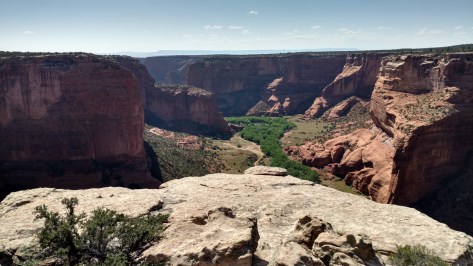
We took the drive along the south rim and stopped at all of the overlooks.

IMG_20160524_150301837_HDR

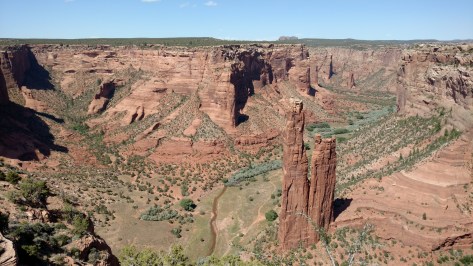
The last overlook is at Spider Rock, a beautiful column of rock that has been the subject of thousands of pictures.

IMG_20160524_155317365

Many Navajo families still live in the canyon. The last time Pam and I were there we took both our Moms and hired a Navajo guide to drive us into the canyon. He grew up in the canyon and told us many stories of life in the canyon.

In the 1860s, the US Army, led by Kit Carson, killed or captured many Navajos in the canyon. The captured Navajos were taken to Fort Sumner, NM, over 300 miles away, on what is now known as the Long Walk. Many died on the walk and in captivity before being released and allowed to return to the canyon.

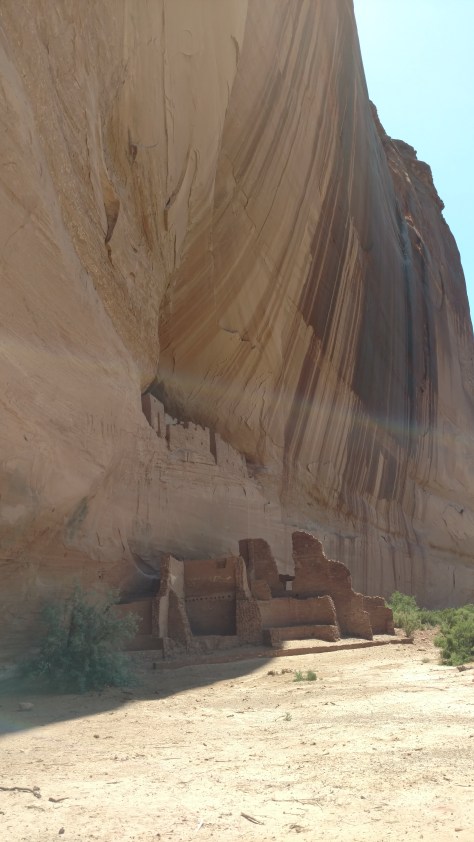
The only hike you can do into the canyon without a guide is to the White House ruins. It was a pretty hike down and back up through the sandstone canyon.

IMG_20160525_120028585

All six of us then returned to Navajo National Monument for the first guided hike of the year down to the Betatakin ruins. The ruins are in one of the many canyons that are visible from the hike. There is a longer hike to the Keet Seel ruins that we’ll have to go back and do sometime in the future. It’s not a guided hike but there is a ranger at the ruins when you make the 8 mile trek up another canyon.

IMG_20160527_101221635

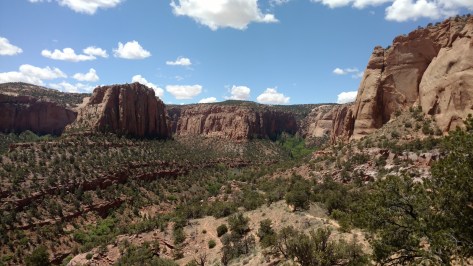
The ruins are one of the most intact ruins in the southwest. Many of the wooden ceilings are still in place. There are a few rock sections of the alcove that have shed over the centuries to wipe out sections of the ruins, but most are still there. The place was occupied from 1250 to 1300 before they left and went south to the Hopi Mesas. Pictographs of several of the Hopi clans are still present today.

IMG_20160527_104441149_HDR

The valley is lush and a different eco system than the rim when looking out from the ruins. The valley was filled with oak and aspen trees and not the juniper trees that dominate the rim.

IMG_20160527_115645923

The hike was beautiful.

IMG_20160527_130057868

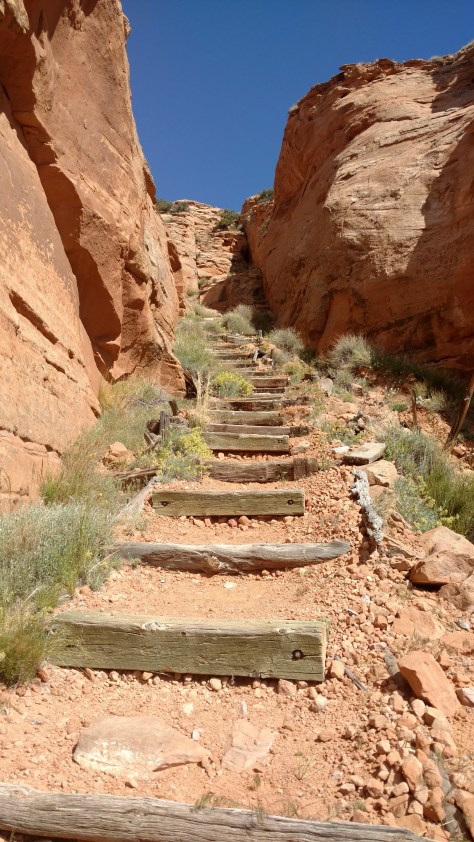
However, as with all hikes into a canyon there is always the issue of getting back up and out. A section of the hike reminded us of South Kaibab at the Grand Canyon, but it was just a short section.

IMG_20160527_102703246

We drove home on the holiday weekend and the forest south of Flagstaff looked green and healthy. Small cities of campers were everywhere in the woods for the long weekend.

IMG_20160528_130018108_TOP

Pam and I need to restock and then it’s off for the summer to the Rockies.

Chaco Canyon and Hovenweep

Lou and Nancy left us at Chaco to head to Overland Expo near Flagstaff, AZ. It’s a yearly gathering of worldwide off-road travelers who definitely have chosen the path less travelled. The weather this time of year at the event is always the wild card. Three years ago it was freezing cold, two years ago it was gale force winds and last year the event was nearly washed out with rain. Therefore, Pam and I decided to pass on the expo this year and continue our own exploration.

The weather system that had been over us for that last few days disappeared and our second day at Chaco was beautiful. We did a great hike to the Wijiji ruins that can only be reached by foot.

IMG_20160519_100022018

Since it is off the beaten path, we had the ruins to ourselves. The construction of the buildings still amazes me, lasting now more that century of without any maintenance.

IMG_20160519_103433000_HDR

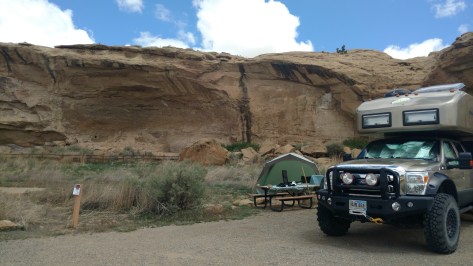
Even the campground at Chaco has ruins in the cliffs nearby.

IMG_20160519_113828424

The sunset that night in the canyon was beautiful.

IMG_20160519_202035297_HDR

We planned to meet up again with Lou and Nancy on their trip home to Colorado after the Expo so we had a couple of days to kill. Where to go? We decided to head north out of Chaco, thinking that Mesa Verde or the Canyons of the Ancients in southern Colorado would be a good choice. We stopped in Farmington, NM to do some laundry and then headed to Shiprock, NM, the capitol of the Navajo Nation. Once we crossed the border into Colorado there was a sign that said Hovenweep 42 miles to the west in Utah, so that became the next stop.

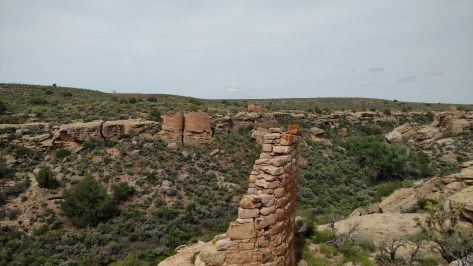
Hovenweep National Monument is another example of Pueblo masonry that has lasted through the centuries. It’s a collection of sites in a 20-mile radius with ruins in many of the canyons. Most of the ruins are near the visitor center in a nearby canyon.

IMG_20160521_101122761

The buildings are constructed on the rocks in the canyon, many a combination of home and storage for the food that they needed to protect after harvest.

IMG_20160521_102511778

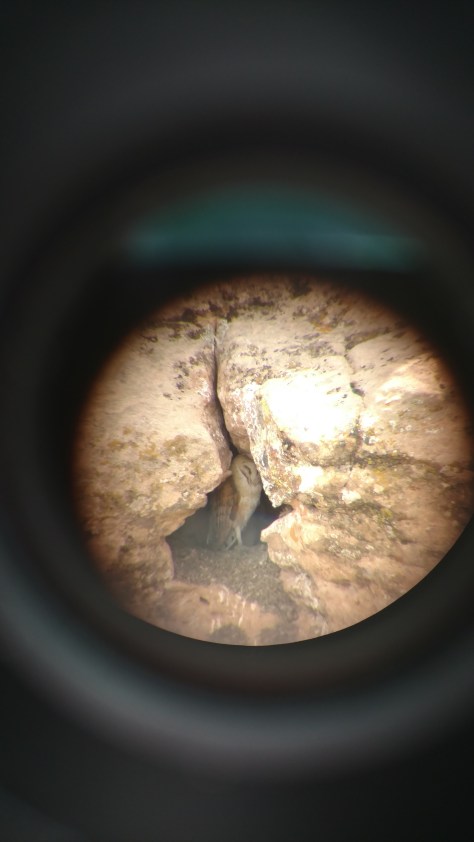
During our hike of the canyon we came upon a Park Ranger who was observing one of the many birds in the area, in this case a mother barn owl with several owlets. The owl had roosted in a cave in the canyon wall. She suggested that I could take a picture of it by holding my camera to the scope she had set up and it worked.

IMG_20160521_104123879

We then took off to the other sites that were located along the many back roads in the area.

IMG_20160521_131738760

The buildings were constructed with defense in mind to protect their families and the food from predators or raiding clans.

IMG_20160521_132453706

The roads were also nice to drive on and luckily there was little traffic to worry about.

IMG_20160521_140013574_HDR

Our campsite there was nice and we set up our alcove for shade and protection from the wind. However, after we returned from our exploration our alcove had lifted out of the ground and luckily wrapped itself around a nearby juniper tree. Thoughts of it taking out a 1000 year old ruin crossed my mind when we pulled up and it was gone.

IMG_20160520_161623850_HDR

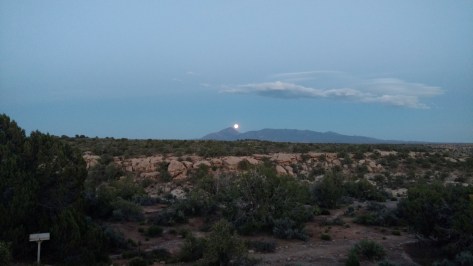
It was a full moon when we were there and it rose out of the mountains to the east to light up the night.

IMG_20160521_203827327

Santa Fe National Forest

We left Taos heading west to find new areas that neither of us had been to before and stumbled upon what must be NM’s fishing playground. Just west of Santa Fe and south of Los Alamos is Bandolier National Monument.

IMG_20160516_134731957

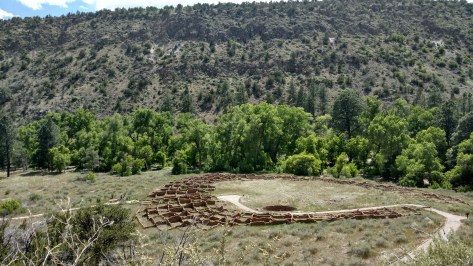
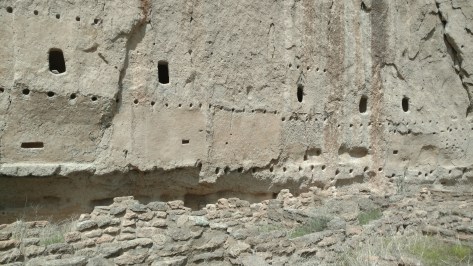
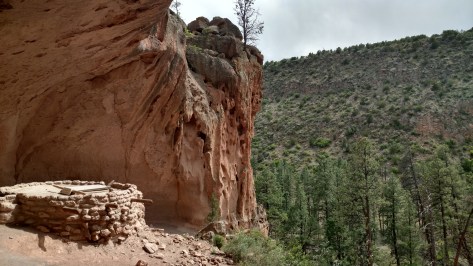
This is a beautiful area that was once a Pueblo settlement until the 1670s, similar to the ones we visited south of Albuquerque. One of the 20 year droughts that the southwest still gets forced these settlements to be abandoned. We camped up on the hill and hiked down into the canyon. The ruins were impressive, both on the canyon floor and up against the walls. You could still see the holes where the wooden ceiling poles were installed that separated the multi-floor dwellings.

IMG_20160516_145921296_HDR

IMG_20160516_152040666

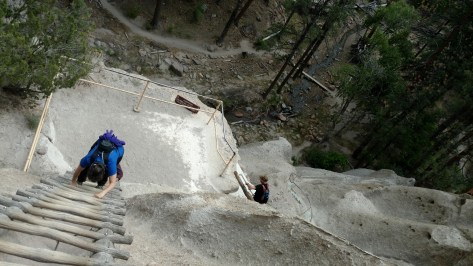
We were allowed to climb into several of the old cliff dwellings.

IMG_20160516_151105383_HDR

One was 140 feet above the floor and required several ladders to get to the dwelling where an old Kiva was probably the site of many ceremonies.

IMG_20160516_160450769

IMG_20160516_160056282_HDR

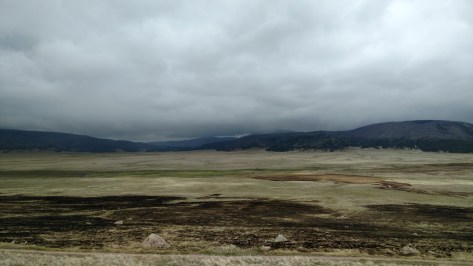
Heading west from Bandolier was Valles Caldera National Monument, which used to be a national preserve, but was recently upgraded to monument status. Similar to Yellowstone, this area was a huge volcano caldera. The area was noted for the many movies that have been shot there over the years. The back area is day use only, but with many fishing spots that will be on list of places to revisit.

IMG_20160517_113646569

We passed the Soda Dam along the road, where calcium carbonate has been building up for thousands of years to form the rock dam and a pretty interesting rock formation.

IMG_20160517_125133941_HDR

We then headed north to Fenton Lake State Park for the night and relaxed in the high elevation woods near a lake and stream.

IMG_20160517_152441300_HDR

We talked to the Fish and Game guy who was there stocking the area with rainbow trout about the condition of the dirt road that headed north over the mountain. Even with the recent rains he said it was passable so we left the park the next day and headed over the mountains. The drive was beautiful and it was so high that the spring leaves had not come to this area yet.

IMG_20160518_091547457

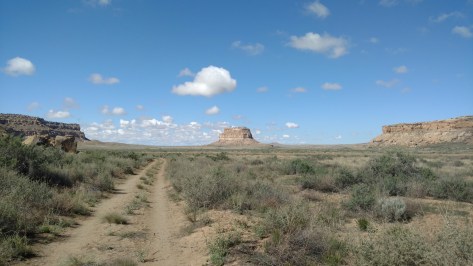
We dropped down the other side of the mountain into Cuba, NM and then west to Chaco Canyon National Historical Park. This is also a world heritage site due the size and significance of the ruins.

IMG_20160518_151525041_HDR

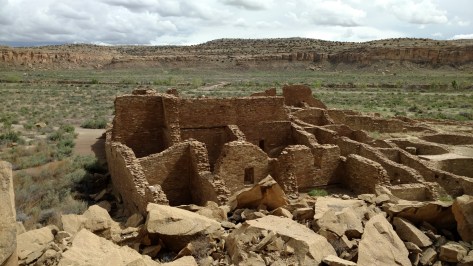
Between 900 and 1100 Chaco was the trade center for a region that encompassed the entire southwest. They have found evidence of sea shells, macaws, chocolate and even coffee beans in the ruins. The great houses there span many miles and many are not even excavated yet. Those that are visible are creations of masterful stone masons.

IMG_20160518_154408330