Category Archives: Uncategorized

Bears Ears

Kathy and Kirk got ready for their 3-day, 20+-mile back-packing trek down Kane Canyon and up Bullet Canyon in the Cedar Mesa region of Utah, which is now part of the Bears Ears National Monument. Most of the Bears Ears area was either BLM land or National Forest before becoming the newest National Monument, with an area about the same size as the state of Delaware.

We moved Kirk’s car to the Bullet trailhead so they would have a vehicle waiting when they finished their hike. The weather forecast was predicting sunny days and the plan was to meet up again at the end of the hike, so we had a couple of days to explore the area ourselves.

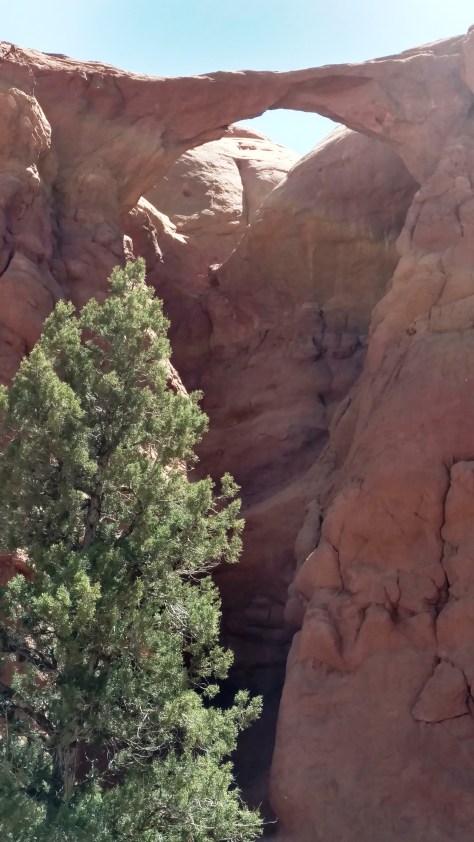
Natural Bridges National Monument was nearby and is now surrounded by Bears Ears, a monument within a monument. We hiked to the three natural bridges and ruins in the park. The difference between a natural bridge and an arch is that a natural bridge is created by a river eroding the rock to form a bridge, while an arch if formed by rock walls fracturing due to weather erosion. Now you know.

That afternoon we drove out to Muley Point, which is now also part of Bears Ears, to meet up with Lou and Nancy, who were enroute to their home in Colorado from the Overland Expo show in Flagstaff. Muley Point sits up on a high plateau overlooking the San Juan River gorge and Monument Valley in the distance.
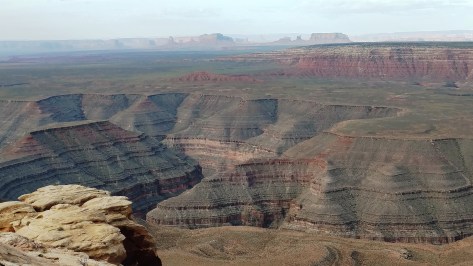
We had a great night catching up while the wind howled outside across the plateau. The next day they headed for home while Pam and I watched a storm rolling north towards us.
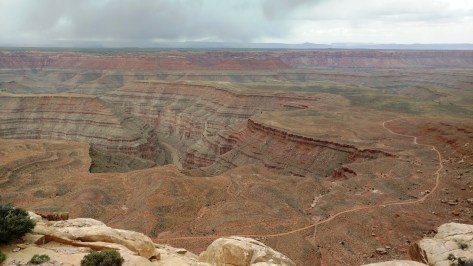
We left Muley Point before the rains made the only exit road impassable. We drove north, in rain and sleet, past the Bullet Canyon trailhead and two back-packers who were apparently hiking the 7 miles back to Kane for their car. We picked them up and dropped them at the Ranger Station and their car.

We continued north until we were out of the rain and back at Natural Bridges NM again. In a case of instant Karma, when I asked the ranger if they had any camping spots left, she said no, but the man behind me said he had a spot and was leaving early so we could have it – pre-paid. Gotta like it.

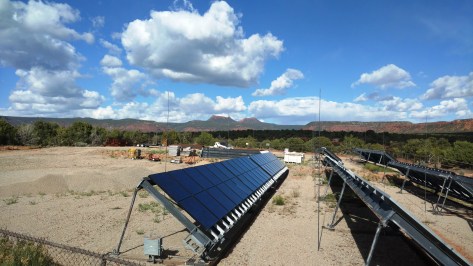
While it continued to rain over the Cedar Mesa area, the sky broke over Natural Bridges for a gorgeous evening. Pam and I did a walk around the campground area and found a solar cell field. Surprisingly, this small field was the world’s largest solar array when it was first installed back in the ‘80s, providing the electrical power to the park.
The next day Pam and I hiked Mule Canyon, exploring the ruins that can be found in just about every canyon in this area. The first ruins we came upon are known as “house on fire” ruins due to the rock flame coloring above the ruins.
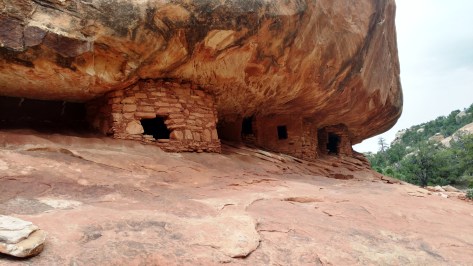
Further down the canyon was another ruin tucked under the overhang of the sandstone wall.
The wind began to blow colder and clouds rolled in as we made our way to the Bullet Canyon trailhead. A ranger at Natural Bridge confirmed what we now knew, weather prediction in the area further than you could see was poor. I hiked down in to meet up with Kirk and Kathy on their way out. Pam decided to guard the warm Roamer.

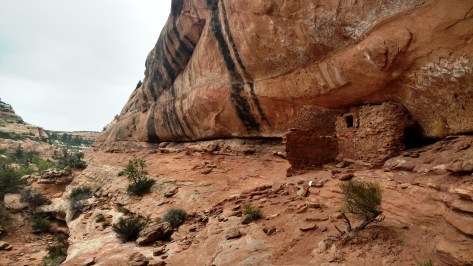
Not far into the canyon you come to the watchtower ruins that stand as a sentinel to the canyon.

After a few miles, the canyon closes in and two awesome sandstone chutes need to be traversed to get further down the canyon. What a blast to hike down these chutes. One can easily see that with a little more water the sandstone becomes very slick, and the route becomes impassable. Even dry, it would be awkward hiking up them with a pack.

The first chute looks like a cliff until you get closer.
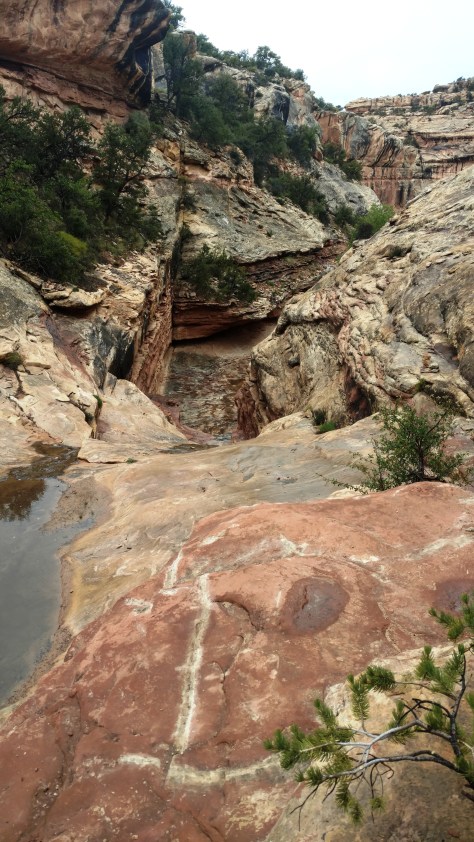
This is a view looking back up the chute, where the first ledge is about 3 feet tall where the water falls.
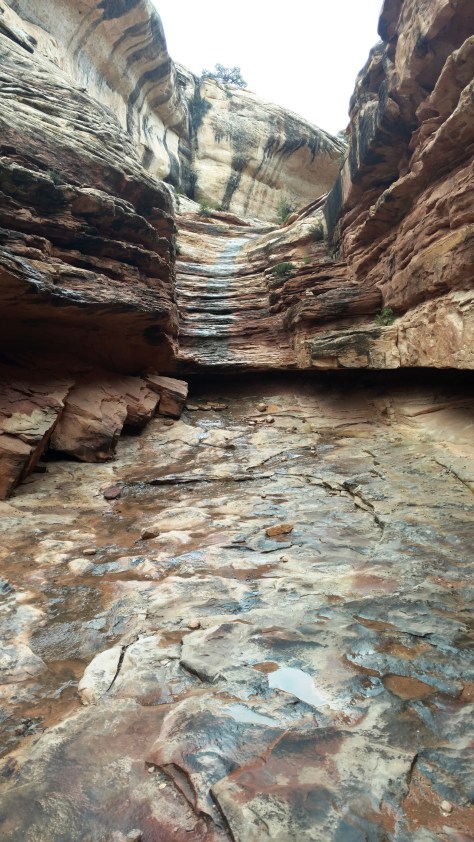
The second chute was just as interesting.

I ran into Kirk and Kathy just after the chutes and we retraced my path out of the canyon. Just prior to leaving the canyon, the light rain turned to big fluffy white snowflakes. We all jumped in the warm Roamer, had some hot home-made chicken soup and watched the outside slowly turning white at the trailhead.

Because Kirk and Kathy were tent camping, we decided to drive out of the weather again to find a more suitable campsite for them. As it turned out the weather system was larger than we thought, and the snow began coming down hard.
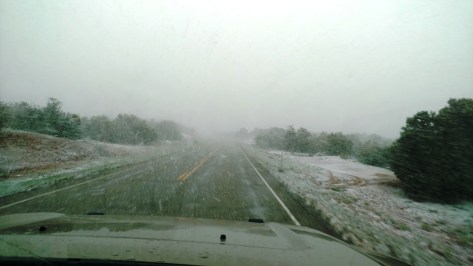
We ended up in a Blanding, UT parking lot for the night, the closest town in the area. The next morning it was still snowing when we woke so we all headed south towards Arizona and home.
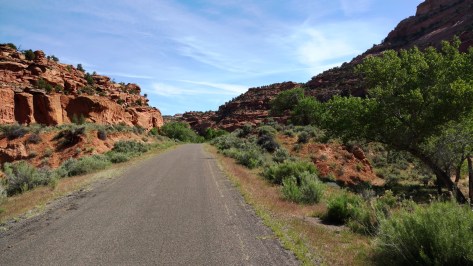
The Burr Trail

The four of us left Calf Creek CG the next day and headed initially in opposite directions, but with the same end objective location. Kirk and Kathy wanted to hike a couple more slot canyons, Peek-a-boo and Spooky for those that know Grand Staircase hikes. Pam and I decided to take a relaxed drive on the Burr Trail to our end goal of Kane Ranger Station in the Cedar Mesa area.

The Burr Trail is a 70-mile, remote road that started as a cattle drive route between Boulder, UT and Bullfrog, UT. About two-thirds of the road is paved now, but the speed limit ranges between 20 and 35 mph.

A few miles after leaving Boulder, you drop down into beautiful Long Canyon.

We stopped several times along the drive to enjoy the sights.

At the end of Long Canyon the road opens up to a colorful valley.

The pavement ends at the boundary between Grand Staircase NM and Capital Reef National Park.

The dirt road runs through the southern section of Capital Reef NP.

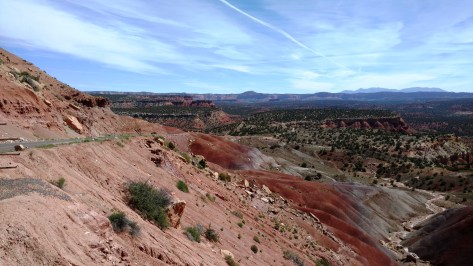
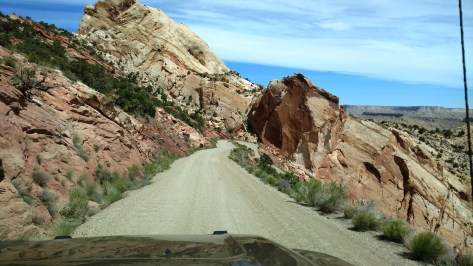
One of the more interesting sections of the drive is the Burr Trail Switchbacks that takes you down one of the faces of the Waterpocket Fold, a 100-mile tilt of the earth’s crust similar to the Squeeze. This is the entry to the switchbacks from the top.

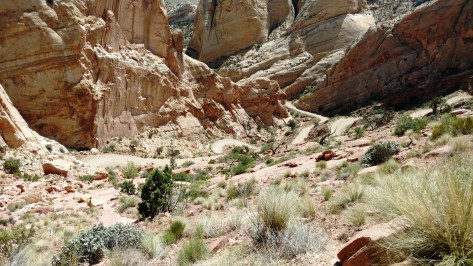
This is looking over the side of the road, where most of the road is still hidden in the rocks until the bottom. What a blast to drive, although the Roamer needed every inch of the switchbacks to make the turns.

As you approach Bullfrog, you can see the water of Lake Powell in the distance.

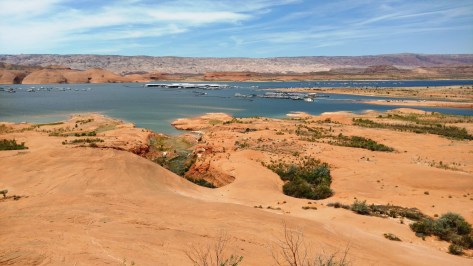
We stopped for lunch at the Bullfrog marina. Lake Powell is the result of the Glen Canyon Dam on the Colorado River. The huge lake has 100s of sandstone cliff fingers that offers world class water-skiing on glass smooth water. In the distance you can see the covered marina that protects the huge house boats used on the lake.

In years past, we would rent a house boat and ski boat with friends and find our own sandstone finger channel to camp and ski the week away. While most folks from Arizona use the Wahweap marina outside Page, AZ to get onto Lake Powell, Utah folks use Bullfrog, where the two are separated by 50 miles of lake.

It was Mother’s Day when we were at the marina and our waitress gave Pam a Mother’s Day present of coffee pods since we were running low and the local stores did not carry them. And yes, the Roamer does have a Keurig coffee maker. There is a difference between being in the back-country and roughing it – lol.

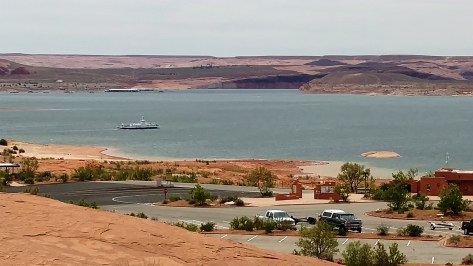
A ferry can take you across to the other side at Bullfrog, but we drove around instead because it was a wash on time between the two routes to get where we were going. Our route took us through the beautiful Glen Canyon National Rec Area before we arrived at Cedar Mesa.

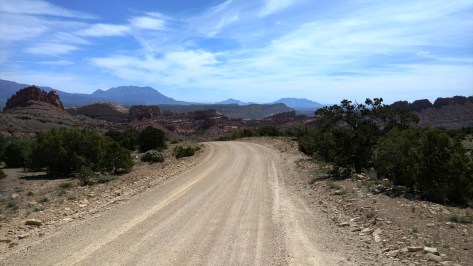
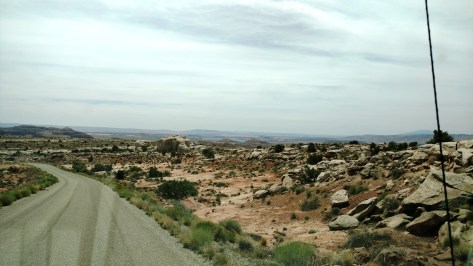
The two flat-top mountains that bookend the road to our next campsite are the Bears Ears Mountains, both over 8,000 feet. This is the area that is the newest National Monument and currently under review.

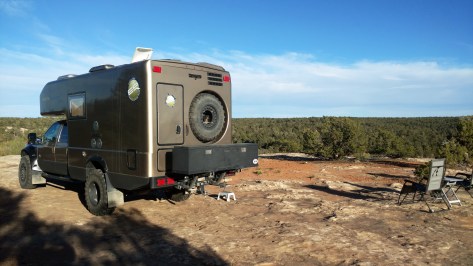
We dispersed camped about a mile north of the Kane Ranger station on a flat rock outcropping. Kirk and Kathy met up with us there at sunset.

The next day we would split for a couple days while they back-packed Kane and Bullet Canyons.

Kodachrome / Grand Staircase

From our base at Calf Creek CG we took off west for the north entrance to Cottonwood Canyon Road. Our attempt to travel this road earlier in the trip from the south entrance was halted due to rain, but the weather passed and the road had time to dry.

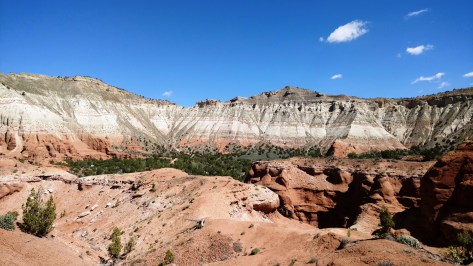
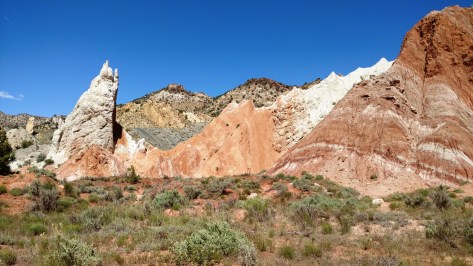
Our first stop along the road was Kodachrome Basin State Park, which definitely earns its name.
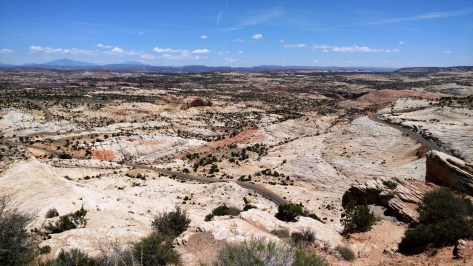
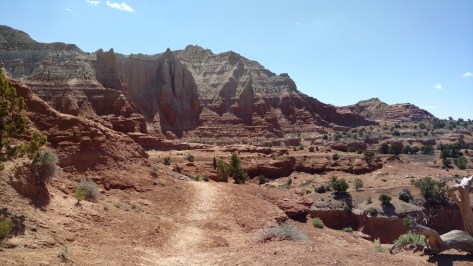
We hiked Angel’s Palace trail to get a view of the incredible rock formations in the basin.

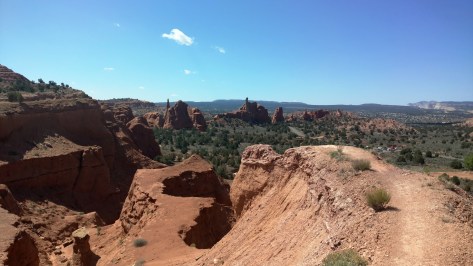
The trail traversed a rock plateau for a grander view of the area.

There were a lot of rock peninsulas that offered great photo opportunities, and possible injury – lol.

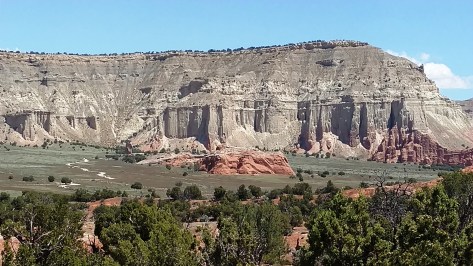
The rock colors, representing different formations over millions of years of vastly different eco-systems was both humbling and beautiful. Kathy is a geologist, so the hikes were filled with information on the rocks.

Although most of the time she was just as interested in the amazing flowers in bloom all around us.

And while the basin was unique, the beauty of the area extended for many miles.

We drove out to chimney rock and then hiked to Shakespeare Arch, a small but colorful arch that Pam and I had never been to before.

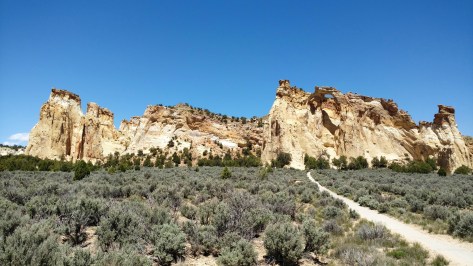
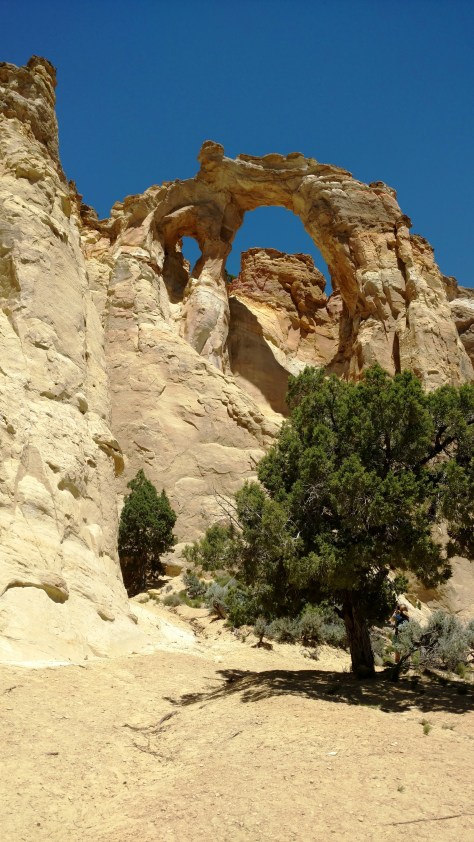
We left Kodachrome and headed south into Grand Staircase along Cottonwood Canyon. We stopped for lunch at Grosvenor Arch.
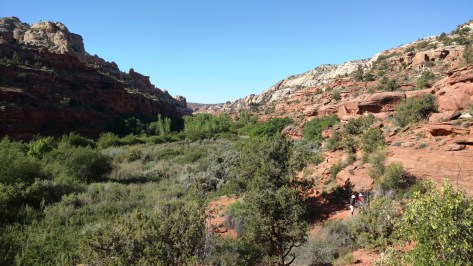
This was a much larger arch, or arches as the picture shows, and impressive.

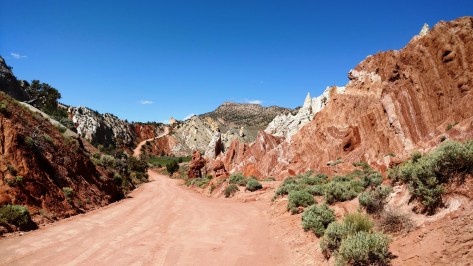
We then headed further south to my favorite spot along Cottonwood Canyon, the Squeeze. The area is named this because of the many colorful rock layers tilted near vertically along a fault to produce an incredible area.

We hiked the Cottonwood Narrows, a slot canyon that runs parallel to the Squeeze.

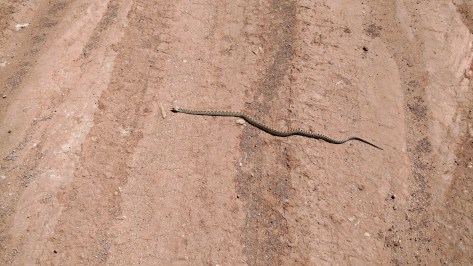
On the way back to the car we came across a 3-foot bull snake making its way across the road. I think he wanted to stop and get some sun on the road, but we hurried him on his way across so that he was not flattened by oncoming tourists.

This is a very unique area.

On the way back to Calf Creek CG we stopped at a campground in Escalante where you can rent vintage Airstream campers to stay in, if you don’t have a camper yourself, and watch the nightly “drive-in” movie from a vintage car. “City Slickers” was playing the night we stopped, but you had to be staying there to watch the movie. It’s definitely on the list for a future trip.

Before getting back to camp we stopped at the Escalante River crossing and hiked up to petroglyphs on the rock walls above the river. Someone had taken power tools and attempted to cut out the 1000 year old petroglyphs along the wall. This is one of the best reasons why these type of places need protection under a national park or monument. It’s very sad to think someone thought this would be acceptable.

The day was a taste of life on the road with a big class A motor home and a car in tow, or even a fifth-wheel after you park and detach your truck. There are definite advantages to having a smaller vehicle to drive around and especially park at various places nearby, while your campsite remains in-place. Not sure we’re ready to give up the Roamer yet because of its advantages in the back-country.

Calf Creek, UT

We took to the road once again for a short trip to southern Utah and back. This trek had two goals: first, to provide logistic support for some friends who were going to backpack some canyons in Utah, and second, a final shakedown of the rig prior to our fourth summer adventure trek. Kirk and Kathy wanted to hike Buckskin Canyon near the Wave, and then Kane and Bullet Canyons in the Cedar Mesa area, now also the Bears Ears National Monument area. Weather is always hit and miss this time of year and you don’t want rain or the flash flooding that comes with it for either of these hikes. Therefore, Pam and I agreed to provide support for their hikes, mostly moving cars from entry to exit points and hot showers in the Roamer after the hikes. Our truck, with now nearly 70,000 miles on it, had its yearly service and a new set of tires – oh yeah!

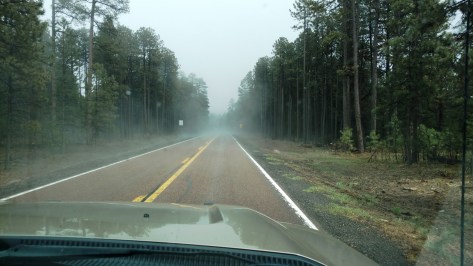
After we left Phoenix and climbed up onto the Rim, it began to rain. We had a few hot days just before this so the cold rain created a cool fog along the road through the forest.

We drove Lake Mary Road to Flagstaff because it’s a much prettier drive that the Interstate. We passed by Mormon Lake and it had more water than I have ever seen. It was a good thing Overland Expo West moved its site this year from Mormon Lake or it would have been like a few years ago when everything was under water and mud. It was great fun to drive in, but folks camped in a few inches of water were not pleased. Pam looked for the 4-foot Common Crane that was blown off course from Russia and was spotted around Mormon Lake. We saw plenty of Egrets, but no Crane.

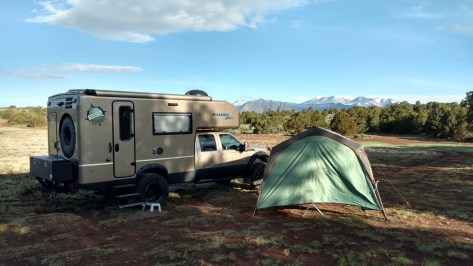
We met up with Kirk and Kathy and dispersed camped near Walnut Canyon National Monument, a small NM just outside of Flagstaff that most folks never see on their way to the Grand Canyon. It rained all evening and was suppose to snow, but the morning broke with crisp, clear blue skies and a nice view of the San Francisco peaks.

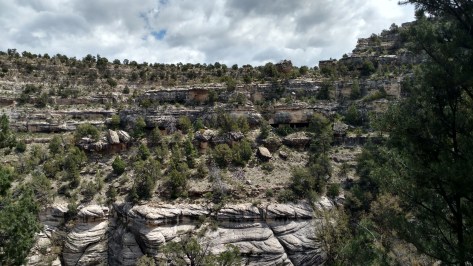
We did a short hike in Walnut Canyon in the morning since Kirk had never seen it before. There were many ruins along the canyon walls of the folks that lived here 1000 years ago. As it would turn out, this trip would be mostly about exploring canyon ruins.

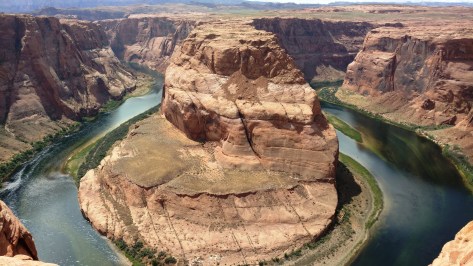
Given the rain that had fallen and the additional rain forecast for the intended hike in Buckskin Canyon, we changed our plans and did not drive the dirt and clay Rockhouse Road to Buckskin Canyon, but headed to Page, AZ instead. We stopped at Horseshoe Bend, where the Colorado River does nearly a 360 turn just below Glen Canyon Dam near Page before flowing down into the Grand Canyon.

The original plan was to head to Calf Creek CG just outside Boulder, UT after the Buckskin hike. The intent was to drive up Cottonwood Canyon Road, through the heart of Grand Staircase Escalante National Monument, but that road too is impassable when it rains due to the clay. Therefore, we drove an arc around Grand Staircase to the west, which got us out of the rain and we camped at Ponderosa Grove CG just outside Coral Pink Sand Dunes State Park. The campground was a nice, inexpensive Bureau of Land Management (BLM) campground, which is typical of BLM campgrounds.

The next morning we went to the Coral Pink Dunes and they are something to see.

The route around Grand Staircase takes you near Zion NP and Bryce Canyon NP, and you start to understand that southern Utah is a geological wonderland. The road between Escalante, UT and Boulder, UT runs through some pretty impressively, rugged country.

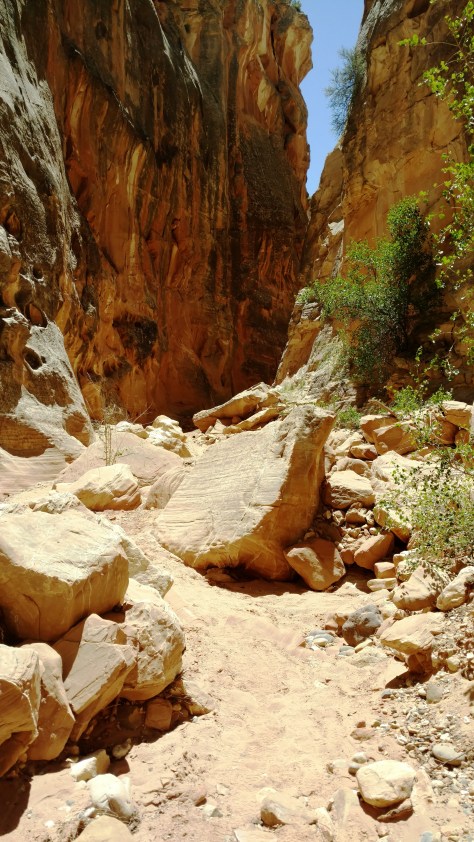
Calf Creek CG is tucked down into one of the rock canyons along this route. From the campsite you are always looking up to the beautiful walls that surround you.

We hiked along Calf Creek, up the canyon, where everything was green and in bloom from the winter and spring rains.

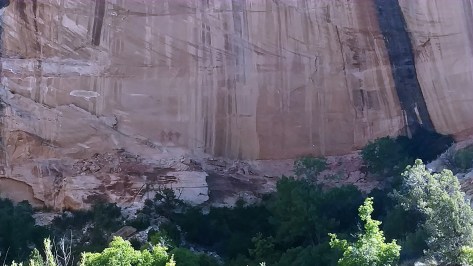
There were petroglyphs along the hike. Notice the three figures just above the crack along the base of the wall. The Freemont Indians made these about 1000 years ago.

The hike ends at the 140-foot tall fall. The water was snow-melt and very cold.

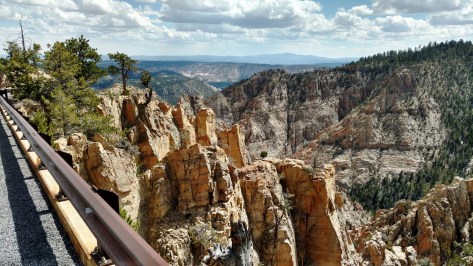
The road between Escalante and Boulder, through the rocks, was a relatively recent achievement. In the 1930s, the CCC constructed the first road between these two towns through the mountains and forest north of the current highway. The route had one interesting point where two deep canyons met to form a peak of a thin row of rock. The bridge built over this narrow rock section was aptly named.

Pam and I camped up along this road last year, but the view from the bridge never gets old. A single camera shot just can’t do it justice.

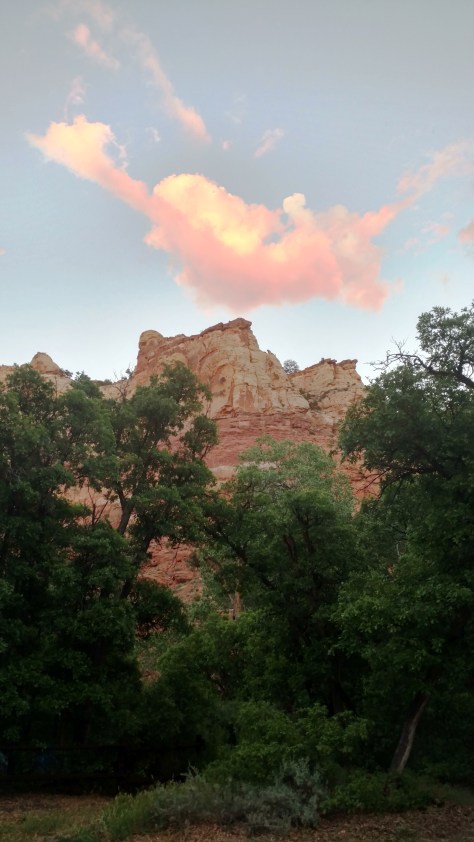
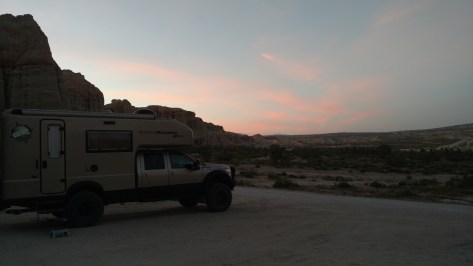
As the sun set over the campground, the clouds turned pink in the fading light.

We have two cars for this trip so it opens up a new way of camping for us. We’ll keep the Roamer at Calf Creek and use the other vehicle to do explorations around the area. Stay tuned….

San Francisco

While much of Route 1 up the California coast sustained damage during the winter rains, the section from Monterey Bay to Pacifica was open so we took it, stopping along the way to admire the view and buy some huge strawberries.

We got to Pacifica and camped at the San Francisco RV Resort, which was effectively a parking lot next to the coast, but it had grocery and hardware stores nearby, was close to the city and had a laundry (always nice when you’re on the road).

We change our water filters once a year and decided to buy the top of the line, which was to remove nearly everything, except pure water. We found out the pressure drop across the magnificent filter was too much for our water pump so we replaced it with the basic water filter once again.

Between Uber and the BART (Bay Area Rapid Transit) we didn’t need to drive the Roamer anywhere once we got to Pacifica. We met up with Tom for four days of fun in the city. Pam is now an Uber expert.
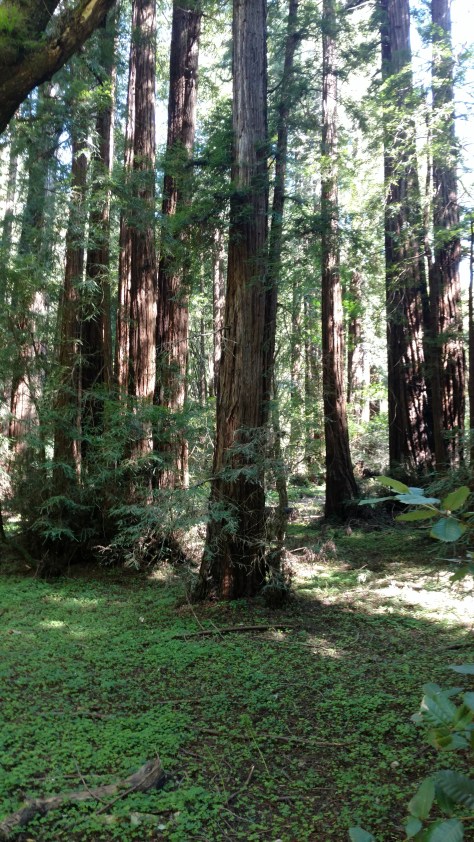
The first day, Tom taxi’ed us just north of the city to Muir Woods National Monument for a nice hike through the redwoods there.

We then drove up into the hills above UC Berkeley for one of the many incredible views of the city we had during the trip. He lives just south of there in Oakland. We had a nice dinner on the Berkeley pier – more seafood.

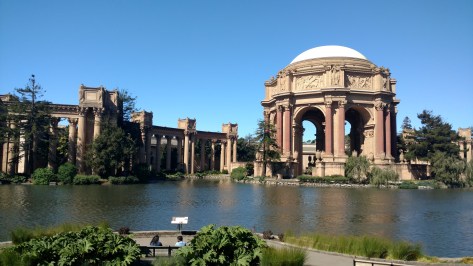
The next day we met Tom in the city and rented bikes. We had breakfast at Mel’s Drive-In and rode past the Palace of Fine Arts.

We then made our way by Crissy Field and to the Golden Gate Bridge.

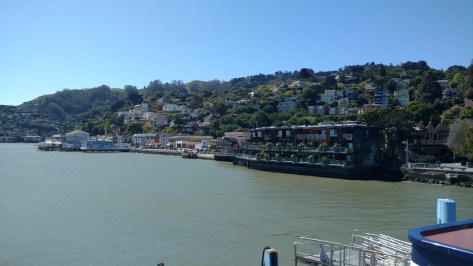
We rode across the bridge. It doesn’t look it, but it’s uphill nearly the entire span going north – into a headwind. We rode all the way to Sausalito and took the ferry back into the city.

We then grabbed a bite to eat and then took another ferry to Alcatraz Island. We had the “behind the scene” tour, which provided a lot of interesting history of the island, and we got to see some cool places.

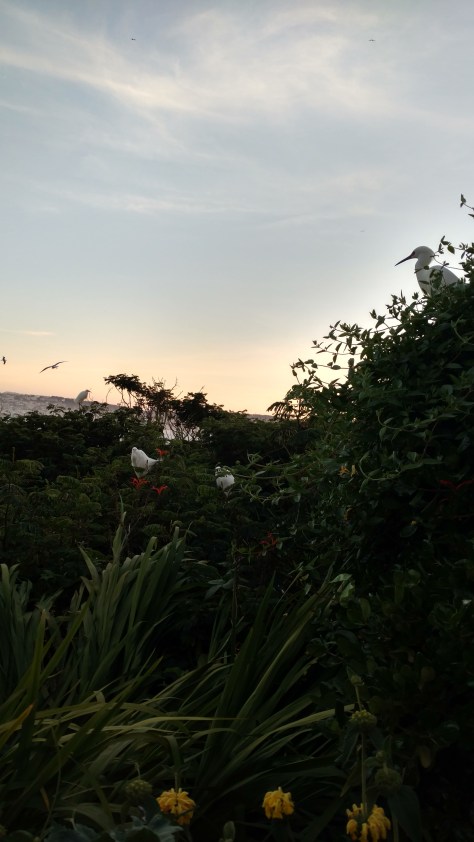
After the tour we were supposed to do an audio tour, but blew it off and got another informal tour around the island with one of the park rangers. There are a lot of birds on the island, which makes sense since its name was “La Ilsa de los Alcatraces” (Pelican Island in Spanish). We stopped at a place that had Snowy Egrets, which make a very funny noise while roosting.

We also caught the sunset from the island looking towards to Golden Gate Bridge.

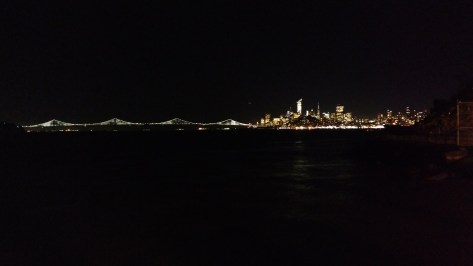
We also got a great night time view of the city from the island on our way back.

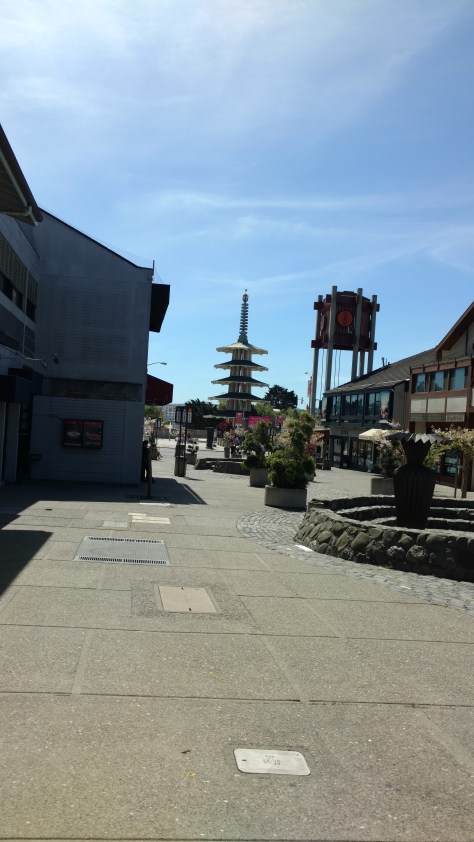
The next day we walked the city. That’s when you appreciate how hilly the city really is. We started near the Peace Pagoda and had a great lunch near there – more seafood. Pam had crab-stuffed grilled artichokes, possibly her favorite meal.

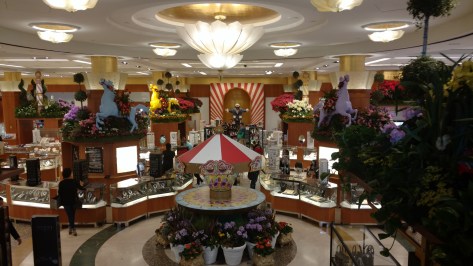
We headed to Union Square, where Macy’s was having a spring flower display in the store.

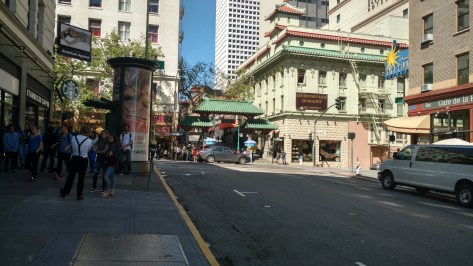
We then made our way to Chinatown.

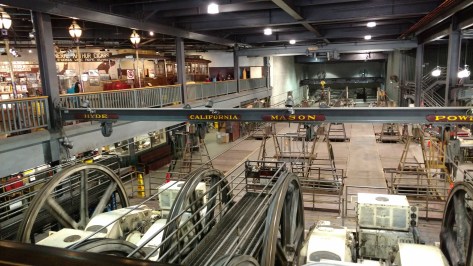
.. and the Cable Car Museum, which is where all the engines that run the current cable cars reside.

We ended the day with a nice Korean BBQ dinner with Devin, who now lives in the Bay Area after graduating from U of A.
Our last day there we met Tom for some clam chowder in a sourdough bowl at Boudin’s to start the day. They had their own version of “bread beasties” on display. The thought of eating the sourdough teddy bear was pretty grizzly, almost unbearable – lol.

We ended the day with drinks in one of the tall downtown buildings looking out over Alcatraz for a great city tour.

We headed home the next day, but blew another tire outside San Jose. Luckily AAA was nearby and the change-out went smoothly. New tires are in our future. We stopped at Pacheco State Park for lunch and all of the reservoirs in California seem to be near capacity.

We got a tip on a great place to camp from a guy who stopped while we were changing our flat tire. It was Red Rock Canyon State Park, just north of Mojave, CA. He was right, it was a great place to camp.

We drove the next day back into the Valley of the Sun. The Roamer needs a new pair of shoes and its yearly service call before he head out for the summer. It was a great trip and a good Roamer shakedown for the upcoming summer.

The Mojave Desert in Bloom

If you like interesting drives, ask Google Maps to give you a route and select “avoid highways” on the route option. It won’t be the quickest or easiest way to any destination, but it may turn out to be the most enjoyable.

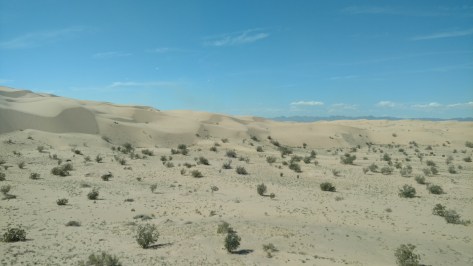
We took off for San Francisco to visit with our eldest son, Tom, who now works in the city by the bay. Our first stop was Anza-Borrego Desert State Park, which lies east of San Diego and west of the Salton Sea. We passed by Glamis, CA and the North Algodones Dunes Wilderness Area. The dunes were covered with all kinds of sand vehicles, but the wind was also howling at about 30 mph so we didn’t stop.

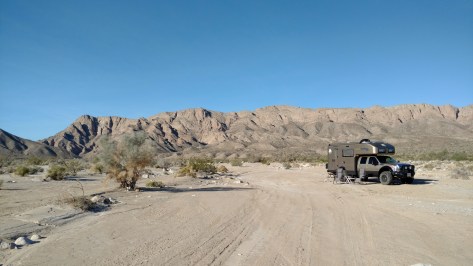
We camped the night along the Fish Creek wash. The primitive campground there was full so we just found a spot along the bank to spend a quiet night alone in the desert.

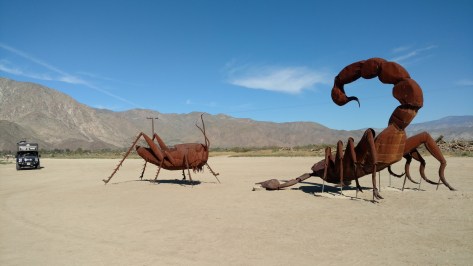
The next day we wanted to hike at the park in Borrego Springs, but it was packed with folks out for the weekend to see the Mojave Super-bloom. We didn’t see many flowers around, but we were a few hundred feet below sea level. However, around Borrego Springs were gigantic metal sculptures of all kinds that were very interesting to see instead.

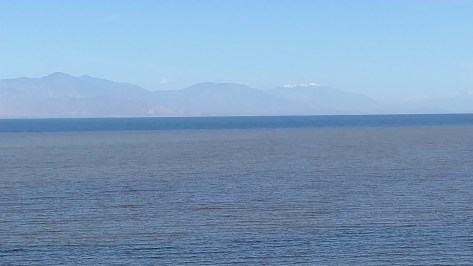
Rather than stick around until the crowds left we decided to make our way north around the east side of the Salton Sea, stopping at the Sonny Bono Salton Sea National Wildlife Refuge for a nice hike. You could still see the snow cap on the Mt San Jacinto above Palm Springs across the sea.

We ended up camping on the north shore of the Salton Sea for the night at Mecca Beach CG.

I always wondered where the Colorado River carried all the rock from the Grand Canyon. Thousands of years ago, the Gulf of California extended north all the way to where Palm Springs is today. The Colorado River dumped all that sediment south of there, creating the current north end of the Gulf. Over the last thousand years the northern section was then a huge lake, Lake Cahuilla, which rose and fell depending on the Colorado River flow. It eventually dried up in the 1300s, but in 1905 the Colorado River raged and blew through a few dams and levees, and for 18 months the river was effectively diverted to this area, creating the Salton Sea, until they fixed the dams. Most of this area is at least 100 feet below sea level and the Salton Sea is just a fraction of the size of the original Lake Cahuilla. There is some geology trivia for those that find it interesting.

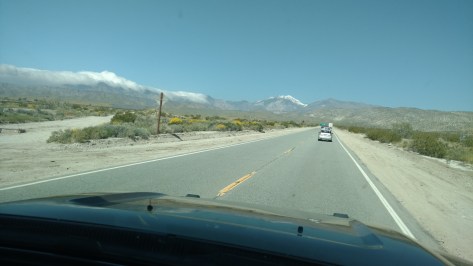
We then headed north on a road that parallels I-10 and runs through Sky Valley and Desert Hot Springs, gaining altitude all the way out of the Coachella Valley. The drive was peaceful and beautiful, with snow visible on top of San Gorgonio Mountain and clouds attempting to roll over the rest of the San Bernardino mountains.

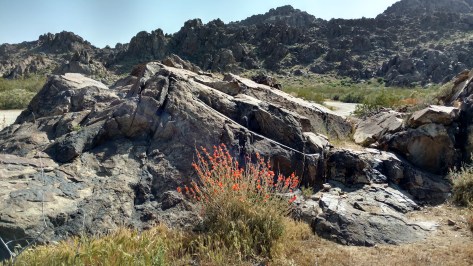
We camped the night at Sawtooth Canyon CG, a hidden BLM spot just south of Barstow, CA. Now at about 3500 feet, the Mojave desert was in bloom and greener than I ever remember.

We then drove across California through Bakersfield and Paso Robles. The area was lush with growth, both in the farms and along the grasslands, with flowers everywhere.

We hit the coast at Morro Bay , camped at Morro Strand State Beach CG, and headed into town for some good seafood.

Next stop – San Francisco.

Sedona with Friends and Blogging Again

Wow, it’s been awhile since the last blog update. Before we start our 2017 adventures, I need to update ultimate campsites from our 2016 trek for the campsites we would definitely return to, and add them to the list. In reviewing the 2016 trek, we camped in 77 different locations in the west over the summer from June to October and an additional 19 during out tour of New Mexico in May.

The new places we camped that we would definitely return to were:
Surgarloaf CG in the Medicine Bow mountains of southern Wyoming – a beautiful spot up at about 10,000 feet that provides some unique arctic beauty in the lower 48.
Wheeler CG in the Great Basin National Park – a real surprise of a National Park and campground that is within hiking distance to bristlecone pines and beautiful vistas.
Echo Park CG in Dinosaur National Monument – the confluence of the Yampa and Green Rivers that is really beautiful.
Chaco Canyon CG in New Mexico – the ancient crossroads of the southwest.
Black Canyon CG along FR150 in New Mexico – a remote site that is enjoyable just getting there.
Navajo National Monument CG in Arizona (the dirt road side of the park) – a hidden treasure in northern Arizona that we passed by for years, but is now a great stop.
Middle Fork CG in the Bighorn Mountains of Wyoming – a small campground next to a stream tucked in beautiful hills.
Fossil Butte National Monument and the BLM spot above the park – a secret camping spot above the NM that has incredible views over the area.
Land’s End CG above the John Day National Monument in Oregon – a private campground with its own aircraft hangar and charm that is a must see.
Blue Spruce CG on the Hells Backbone Road in Utah – a nice campground along the beautiful drive, hidden in the hills where deer are very numerous around camp.
Fiddlers Lake CG in the Shoshone National Forest in Wyoming – a remote campground with beaver lodges, and another great place to drive.
Beaver Creek dispersed camping in Montana near Yellowstone NP – a hidden spot for great free camping along the river near the bustle of Yellowstone complete with local moose.
Cave Falls CG in Yellowstone National Park – a nice campground along the river falls in a quite corner of Yellowstone.
FR611 dispersed camping just north of Gran Canyon NP – a great vista over the entrance to the Grand Canyon and the Vermillion Cliffs on the north side of the rim.

Places we revisited in 2016 that are still great places to camp are:
Fire Point in Grand Canyon National Park on the North Rim – still an awesome spot on the north rim you can call your own.
Ruby Mountain CG in Colorado – the campground was improved and is even now better than before.
Hwy 150 dispersed camping in the Unitas Mountains in Utah – a beautiful stretch of road with many places to pull off and enjoy nature.

All of these places hold great memories of beautiful scenery, great hikes, awesome night time stars and wildlife in the great outdoors. If you get to any of these places, let us know what you think. However, it’s now 2017 so we need to see more of the US and North America.

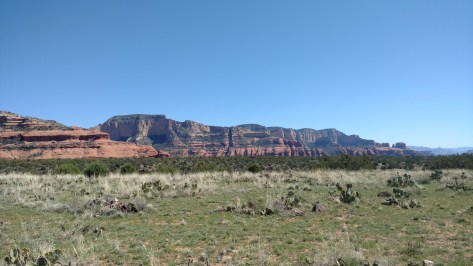
Our first trip of the spring was to the area between Cottonwood and Sedona, AZ. There is a forest service road 525C that has many spots to pull off and enjoy the beauty of central Arizona. We met up with Lou and Nancy there for a great weekend of hiking and camping. The desert was in bloom all around us.

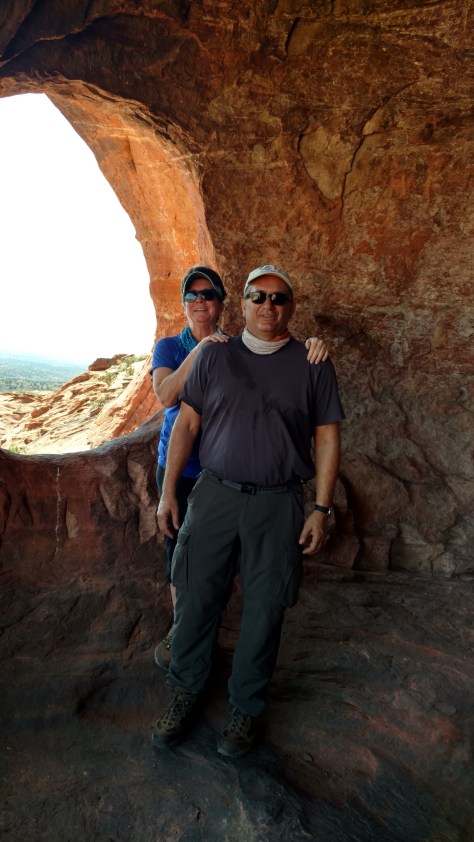
We hiked 7 miles from our campsite to Robbers Roost, a cave in the rock that once served as a hideout in the old western days. Now it’s just a cool place in the shade with a spectacular view.

The next day we hiked 8 miles to a stream nearby, admiring the beautiful rocks that make the Sedona area a sightseeing destination.

We cooked some awesome meals under the stars, where the Milky Way and planets were just jaw-dropping clear. We headed off in different directions after the weekend, but it was a great start to 2017.

The Migration South

We left Buffalo and headed out of Wyoming down the front-range in the eastern part of the state. While it took nine days to get from the Colorado border to Buffalo, it only took 6 hours to drive down the interstate to get back to Colorado. It was our first long stretch of interstate driving the entire trip and neither of us liked it.

img_20161002_124128459

Since we had an appointment the following day for our rig in Dacono, CO, we took the interstate from Buffalo on south. The change in traffic as we crossed the border into Colorado surprised us both. You hit Cheyenne, the border and Fort Collins, CO fairly quickly, and cars seem to appear out of nowhere to create traffic when we have been used to the entire road to ourselves.

We made our way to St. Vrains State Park for the night, just north of Dacono. The campground is just a few miles from the EarthRoamer plant where we needed to have our yearly tune-up on the rig. It’s also a water habitat for thousands of birds so it makes for a good place to camp. The only drawback is its proximity to the freeway, but for a night it’s livable.

We were treated with a beautiful sunset over the Rockies to the west.

img_20161002_183947950_hdr

We had a few things fixed on the rig and added a couple of upgrades for another great trip to the EarthRoamer facility. It’s always great to chat with the friendly folks that work there.

A couple of reporters from the Colorado Springs Gazette were there doing a piece on the company. We got interviewed as one of the owners. Maybe we’ll be in the article. We also got to see the new HD vehicle being built – a 35 foot, F-750 chassis with 47 inch tires. It will the biggest, baddest vehicle in the back-country when it rolls out early next year.

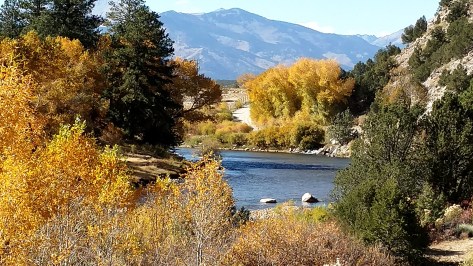
We then headed southwest over the front-range and onto highway 285 that runs down through central Colorado. It’s a beautiful drive any time of year. Once over the first set of mountains the elevation in the huge valleys you drive though is about 9,000 feet, while you are surrounded by many of Colorado’s 14,000-foot peaks. We made our way to just north of Salida, CO and camped at the Ruby Mountain CG along the Arkansas Headwaters.

img_20161004_150715902

Over the past three years, we’ve added a few hundred pinstripes to the side of the vehicle in the process of pushing trees and bushes aside. We had our windows buffed out at the factory and the difference was startling. They look brand new and crystal clear.

img_20161004_145901322_hdr

The mountain peaks were all dusted in white when we woke in the morning and the air had a nice fall chill. We then had a huge driving day, which under normal travel conditions would have likely been 3 of 4 days, but we now had another appointment in Arizona that we needed to make.

We headed south and dropped down Wolf Creek Pass, which is a beautiful place if you don’t have to worry about the road down, and into Pagosa Springs for lunch. Riff Raff Brewery gets a big thumbs-up.

img_20161005_114140644_hdr

We then continued through the 4 corners area and into Navajo National Monument in northern Arizona. We had never been there before this year, but it is quickly becoming a favorite stop.

img_20161006_093508767_hdr

We were treated to a beautiful sunset to the west and a unique sunrise to the east during our stay.

img_20161005_185956115_hdr

img_20161006_072334972_hdr

We then drove south into Flagstaff, AZ. The aspen trees on the north side of the San Francisco Peaks are just starting to hit their full color.

img_20161006_104500238

We continued on to our next stop at the Orme School. Pam has board meetings that she needed to attend, which bounded our trip this year. The elevation of the school is about 4,000 feet, which makes it the lowest elevation we’ve been in the past 4 months.

img_20161007_091733308

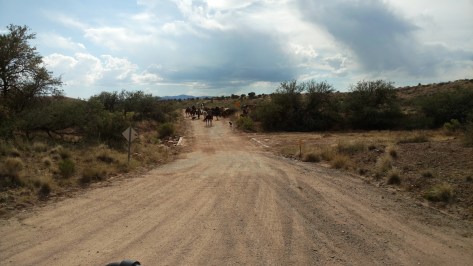
After the meetings, we headed on back to the valley to end Epic Trip #3. We ran into a roundup along the road where a group of Wounded Warriors were at Orme to help with some of the ranch work.

img_20161008_141218295

Planning is already in works for our 2017 adventures. It will probably include a southern Gulf State trek to Florida and back in the first part of the year and then a northern US – southern Canada trip to the Maritimes and back, picking up the places we missed in Epic Trip #1.

Six months, ten states and three river trips made up this trek. Western US is a very beautiful place.

Buffalo, WY

Pam and I settled into Buffalo, WY for the duration of my blacksmith class. It’s a great town with friendly folks and a vibrant Main Street.

img_20160918_161437711

We stayed at an RV campground within walking distance to the forge. Our neighbors were vegans and into lawn maintenance.

img_20160924_182254247

Buffalo has a population of less than 5,000, but had a lot going on within town and nice public facilities around town. Pam took advantage of the travel downtime to transcribe several CDs worth of 30 year old interviews into text for a friend.

She also explored the trail system in town with some nice walks.

img_20160928_185801632

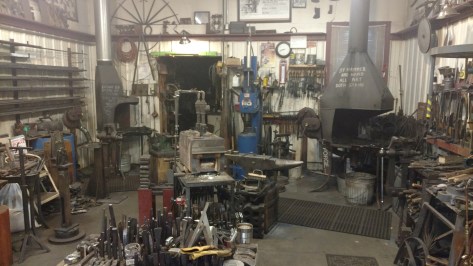
I spent 6 days a week in the forge learning new techniques from David, a Mater Blacksmith in Buffalo. I also forged a few new tools that I can use in the future. We used mostly coal for our fuel, but lit up the acetylene torch more than once for some localized heat.

img_20161002_084457351

We tried several of the local restaurants along Main Street and did some Christmas shopping from the local artist stores. On Thursday nights there is an open mic at the Occidental Saloon. It’s been a tradition going on for 15 years now.

img_20160918_161313481

The first Thursday we were in town we arrived late and could not even get into the place. The next Thursday we had dinner in the saloon and enjoyed the 3 hours of open mic. The chairs in front of the band are the “on deck” players as they rotate the players onto the stage so that everyone gets a chance.

img_20160929_190251886

Earlier in the week we had dinner in the saloon with an 80 year old couple from Boston. They were doing a cross-country road trip from Boston to Florida via San Francisco. I guess you are never too old to be adventurous.
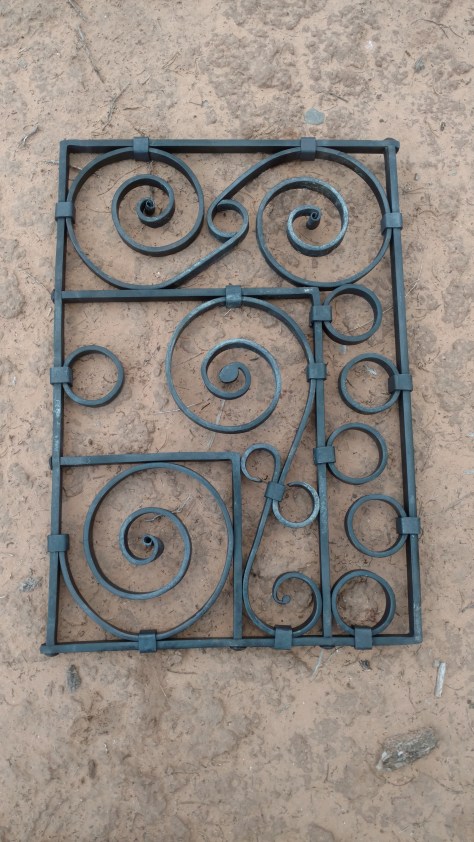
The blacksmith class taught the techniques to make mortise and tenon joints, crisp 90 degree corners from bent bars, scrolls and collars – all starting from flat bar stock. Here was my finished project, a 16” x 24” frame that weighed in at 24 lbs of steel.

img_20161005_181148286

Now the negotiations begin within our household as to when I can set up a forge. I may have to wait until we find a new place with its own workshop, but I’m sure I’ll think of something in the meantime.

Great class and great town -we’ll have to revisit Buffalo again in the future.
Shuffling off to Buffalo, WY

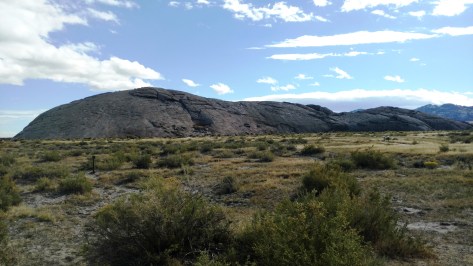
Before going to Casper, WY we took a little detour to Independence Rock, just outside Casper. This 130-foot tall granite landmark was the July 4th schedule objective for the Oregon, Mormon and California wagon trains that pushed west. Over 500,000 settlers traveled this route from the 1830s to 1870s. Many of the pioneers carved their names into rock and some can still be seen today.
img_20160914_101652696

We then proceeded to Casper and stopped for lunch at The World Famous Wonderbar, Casper’s only micro-brewery. In Casper’s earlier days you could ride into the bar on your horse and get a beer for both you and your horse. The place has recently changed owners and is going to be shut down for a remodel and, unfortunately, the brewery will be closing. Could be a good place to start one….

img_20160914_144431879_hdr

Heading west out of Casper we passed Hell’s Half Acre, which really covered several acres. This colorful area was a beautifully eroded rock formation that does not justify its name.

img_20160914_155255480_hdr

We camped for the night at Boysen State Park in Tough Creek CG, with a beachfront spot along the reservoir.

img_20160914_185113792_top

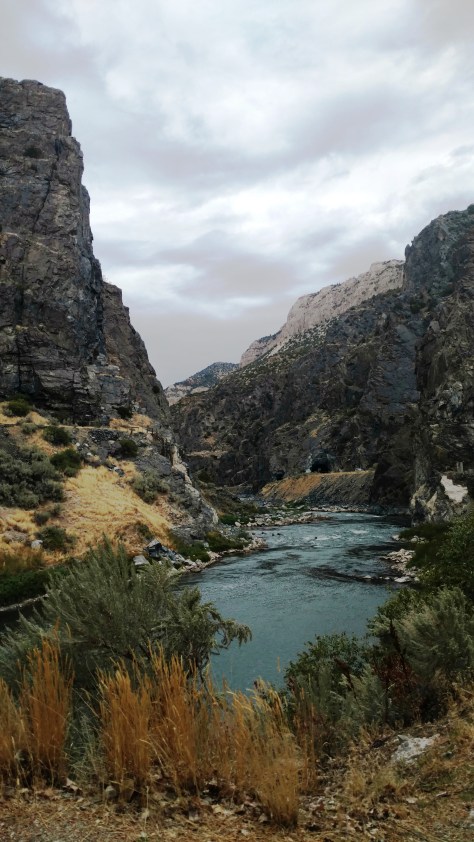
The next day we drove up the beautiful Wind River Canyon to Thermopolis, WY. Thermopolis is known for two things: the Wyoming Dinosaur Center and the Hot Springs.

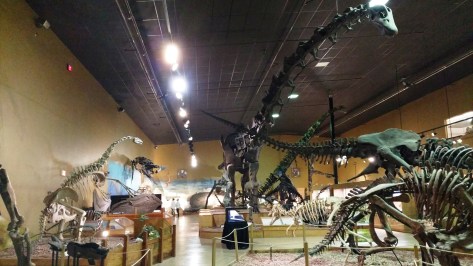
We visited the Dinosaur Center and even though we’ve seen a lot of fossils recently, this place was impressive. They had many unique fossils from around the world, not just from Wyoming and the US.

img_20160915_112816521

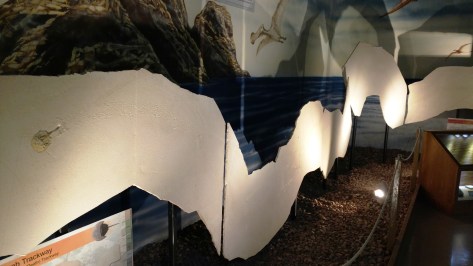
This was a fossilized horseshoe crab, and the 100 feet of fossilized trail it left behind before becoming part of history.

img_20160915_112235589

Many of the folks working in the lab on the restoration of the bones there were quite old. I guess a few folks commented on this because the sticker I got from there said, “Fossils working on Fossils – Wyoming Dinosaur Center” – lol.

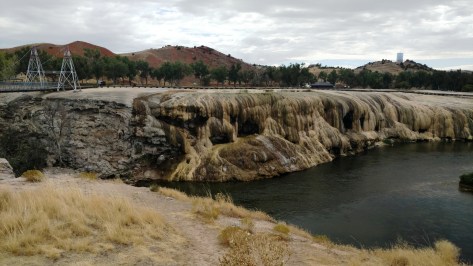
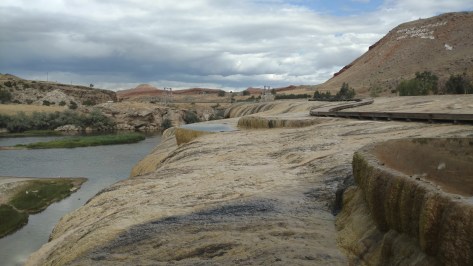
The Thermopolis Hot Springs gush out of the ground and into the Bighorn River at a rate of 3.6 million gallons per day at a temperature of 135 degrees. The mineral content of the water is very high and produces the very interesting rock formations.

img_20160915_132847897

Over the centuries, the layered pools formed and created a beautiful landscape rich in color.

img_20160915_133949304

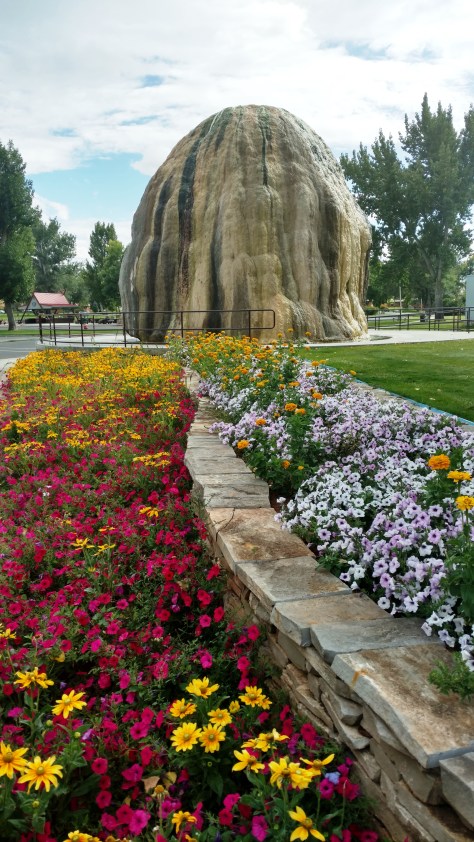
In 1909, the folks built a stone tee-pee spring vent structure and over time the calcium and mineral rich water created a colorful mound that is still venting water out the top and growing.

img_20160915_144955799_hdr

The State Park has several pools that you can use for free. We soaked our bones in the mineral waters that are kept around 104 degrees. It felt great, but you had to get used to the sulfur smell.

img_20160916_115751316_hdr

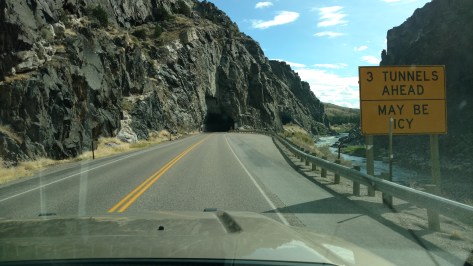
We then drove back down the Wind River Canyon to camp for the night. We had to pass through a series of tunnels carved in the rocks along the road.

img_20160915_152624583_top

Our camp spot looked right up the canyon entrance. The BNSF railway track was on the other side of the river from the road and cut through the canyon in its own tunnels. The rushing water and occasional train made for a really great place to camp. You felt the rumble of the trains in the ground long before you saw them weave in and out of the canyon tunnels.

img_20160915_164727240

Since we had to drive through Thermopolis again on our way north we stopped and soaked in the hot springs one more time before leaving town. We had a lot of discussion on how to get our own hot spring for our next house.
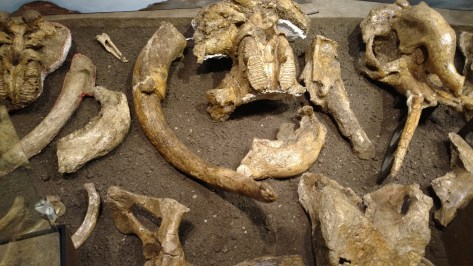
We stopped at the Washakie Museum in Worland, WY. Named for a great Shoshoni chief, the museum had a lot of the local history, including the Cattle Wars, bones from mammoths and bronze statues of Chris Navarro as a short-term exhibit.

img_20160916_142835293

img_20160916_143223779

Our next stop was Ten Sleep Brewery, just outside Ten Sleep, WY. They had great beer and definitely get the best brewery setting award too.

img_20160916_150835736

We then climbed up into the Bighorn Mountains and camped at Lake View CG, overlooking Meadowlark Lake. It was noticeably colder since we were once again near 9,000 feet in elevation.

We dropped down into Buffalo, WY, which turned out to be a busy little town for only 4,600 folks. We spent the afternoon there before climbing back up into the Bighorn Mountains to camp for the night at Middle Fork CG.
The campground was along a small brook and the aspen leaves are turning due to the near-freezing temperatures at night.

img_20160918_095642146_hdr

img_20160917_145946114

We dropped down into Buffalo again the next day and we’ll be here the next two weeks while I complete a Journeyman level blacksmith class in the local forge. Staying at an RV park in town for two weeks may be tough, but it’s walking distance to the forge.

For those “Longmire” book and TV fans out there, author Craig Johnson lives nearby in Ucross, WY and (according to one of the local shop owners) Buffalo is the real life town that Durant, WY is based upon.

img_20160918_144316660_hdr

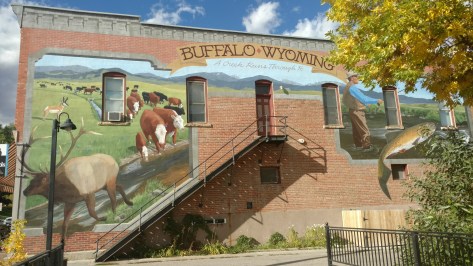
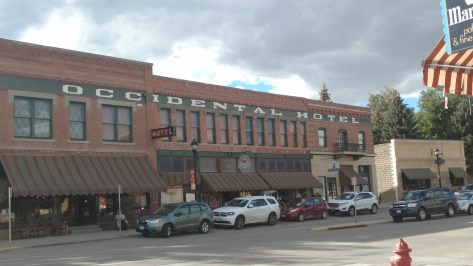
Buffalo has a small, but historic Main Street. The Occidental Hotel and Saloon was rated the best western hotel saloon in 2009 by True West magazine. A few of every animal you could possible shot is stuffed and hung on the saloon walls, including a longhorn steer that was a longtime member of one of the local ranches. There were Pronghorn and Buffalo heads I wouldn’t mind having from the bar.

img_20160918_161506002

We’ll immerse ourselves into the local activities for the next two weeks before our migration south. Maybe we’ll even be Longmire fans by the time we leave – lol.